5 Steps to a Light Heart in a Season Heavy with Coronavirus Concerns

The Coronavirus Concerns are Valid

This week I have been irritable.

At my husband, at my son when he constantly asks me for snacks, at myself because I knocked a whole roll of toilet paper into my washer without noticing AND WASHED IT in the middle of a toilet paper crisis. At my sweater because I couldn’t get it onto the clothes hanger the first try.

That was the indicator that let me know this wasn’t really about my husband or my son or the TP or my sweater. The small situations were not causing me to be bothered, they were revealing that I am bothered by something deeper.

A close up of a coral

Description automatically generated

My heart has been heavy over all the unknowns and precautions and trying to walk the fine line between wisdom and paranoia. The scientific community is making progress on treatment possibilities, but they’re still in the clinical trials stage. Models suggest that the measures we have taken will help keep healthcare resources available to the severely ill, but that this scenario our world is in will not resolve quickly.

Meanwhile, I’m concerned about our investments, unsure about our income and our economy, aware of the threat that looms over the vulnerable people I love. I’m wrestling with how powerless I am to protect them. I’m angsty over how long I may have to go without social interaction. I’m unnerved by the opinions and interactions on social media that are growing sharper as the disease spreads and the stress sets in. I feel all my plans growing less and less likely in the coming months.

As painful scenarios leave the hypothetical and start to rip their way into our reality, it’s more challenging to dismiss my concerns. The coronavirus concerns are valid.

And they are heavy.

A person standing on a rock

Description automatically generated

Is it as simple as “Just don’t worry about it?”

I have been sitting with this verse.

“Give your burdens to the Lord,
    and he will take care of you.
    He will not permit the godly to slip and fall.”

–Psalm 55:22

I love that I am not asked to wildly abandon my concerns as if they’re just in my head. It’s one thing to hear “just don’t worry about it” when I’m fretting over unlikely possibilities and I actually do need to lighten up. But when I’m bearing heavy situations and high risks and a great deal of loss is at stake, it’s not that simple.

If I am to shift the weight off my shoulders, I must know these things have been delegated carefully into the hands of one who is equally invested in their importance and is competent to manage them.

I think that’s why this verse connects with me so well. It’s not an over-arching, “just stop being so concerned” message. It’s a personal and specific invitation to name those things that burden my heart and give them directly to the One who promises to take care of me.

When my troubles have shifted onto the plate of someone in whom I have great confidence, they can remain unsolved and yet my heart can be light. It’s a matter of who I think is called to handle the situation.


One Finger At A Time

I am a worrier and an overthinker and a plan-ahead-er, so one truth that has made a huge practical difference in my life is this: “Be anxious for nothing” is not a matter of personality, it’s a matter of obedience.

With the ever-evolving concerns we are facing, I have been trying to wrap my mind around the how of obeying that command.

I know when something has stolen my focus and has my mind over-analyzing and my heart burdened. I know in that same moment that I should not be focusing, over-analyzing, or holding onto that burden. I struggle with how to let go.

A picture containing building, game, man, woman

Description automatically generated

How do I get from Point A: anxious, to Point B: not anxious?

How do I loosen my white-knuckle grip on the things that I cannot stop caring deeply about? In the midst of a hard situation I’m likely to be in for a while, what are the day-to-day steps to a light heart?

First, I think I have to recognized that by letting go of them, I am giving them to someone who is able to do a better job managing the situation than I can.

Second, because the worries will keep re-surfacing in my mind, I must capture those thoughts and link them to heart-steadying truth. That way, the next time they show up, they actually serve me. I want practical replacement thoughts – mental resets that guide my mind back to solid reassurance, so that as these concerns arise, while I do whatever it is I need to do, I also settle back into how I am well taken care of. I take the threat seriously, but I live with a light heart.

Finally, I think it’s easiest to let go one finger at a time.

A close up of a persons hand

Description automatically generated

So, in a season heavy with coronavirus concerns, I identified 5 areas where I felt irritation, worry, frustration and fear surfacing in my heart and my thinking.

This is my tool so that each time I feel myself growing tense, restless, and heavy as I walk through the weeks ahead, I can glance at my hand with its 5 fingers, or at this handy, short-and-sweet printable on my fridge and count down 5 steadying steps that help me let go of one specific area at a time.


Five Steps to a Light Heart

A picture containing food, drawing

Description automatically generated

When I feel concerned over how this situation will affect my:

I will offer sacrificial love freely and lay down my expectations.

Any time stress is heightened, we feel that tension in our relationships. Because it’s easy for me to obsess over rough interactions with other people and stress over whether we are okay or not, I want to be careful about how much time and attention those relationship dynamics get in my heart. I think the truth I can sit with is this: when people are not fine, their interactions suffer, and a lot of people are not fine right now. I can’t necessarily count on the reassurance, attention and company I want from other people. But I can shift my thinking from what I can GET to what I can GIVE. I can release people to just be where they’re at and keep offering them grace rather than fixating on hurt, surprise or disappointment when they don’t respond to me how I expect them to.

I will delight in how they are precious to me and pray for their protection.

This area probably hits the hardest: the threat of losing our loved ones. I don’t know what will happen, but today, I want to appreciate those who are precious to me rather than living in dread of losing them. I will cherish the people that God has put in my life and thank him for the gift that they are. I will praise him for providing a way for us to continue our relationships in eternity, with all the time in the world and none of the struggle or pain or physical ailments to get in the way of enjoying each other; even if he allows us to be separated for a time. And while I recognize that God’s goodness, provision and protection do not always look like I expect them to[1], I will remember that He is capable of keeping my people safe and healing their bodies if they get sick. He listens intently to my every request, so I will pray and pray and pray for Him to protect them as often as they come to mind.

I will think of one way God has taken care of me in the past and release my desire to see and control the future.

And I said, “This is my fate;
    the Most High has turned his hand against me.”
But then I recall all you have done, O Lord;
    I remember your wonderful deeds of long ago.
They are constantly in my thoughts.
    I cannot stop thinking about your mighty works.

–Psalm 77:10-12

Because God has not let me in on all the details of his plan for my future, it is easy for me to grow fearful and skeptical as I face the uncertainty ahead. It is tempting to expend all of my energy searching for some clue as to how this will go so I can prepare perfectly. When things seem to take a turn for the worst, I can start to wonder if He’s on my side at all. But one of the most effective things to settle my frustrated, searching heart is to stop and remember one way God has specifically cared for me in the past. This is the God that has revealed his heart for me, intervened for me and worked on my behalf in so many creative and varied ways. When I cannot predict his plan, I must return to the evidence of his character. When I’m unsettled over a future I cannot see or control, I will trust the heart of the One who can see and control all that is to come.

I will name how my needs have been met today and ask God to faithfully meet my needs tomorrow.

When I’m used to God meeting my needs one way, I can grow attached to how things work right now and be really thrown by major changes. But God often uses these transition periods when my fine-tuned system no longer functions to help me see that I have stopped looking to him for help; I have shifted my trust to my system, my ability, and my management. He lovingly allows my systems to break down so that I will learn that he is just as able to provide for me in a new way. The changes I’m adjusting to did not catch him by surprise. When my thoughts drift to my finances and I start trying to calculate if we will be okay, I will stop and ask this question: Do I have what I need today? I will name the things I notice that God has already put in place, on this day. I will remember that, whatever is next, he is able to provide what I need, maybe in a new way I haven’t yet thought of. I will lay down my calculations and ask him for help, because he is faithful to answer the one who waits on him.

“I am the Lord who opened a way through the waters, making a dry path through the sea…But forget all that – it is nothing compared to what I am going to do.”

–Isaiah 43:16, 18

“So don’t worry about these things, saying, ‘What will we eat? What will we drink? What will we wear?’ These things dominate the thoughts of unbelievers, but your heavenly Father already knows all your needs.”

–Matthew 6:31-32

I will rest in the freedom I have been given to just do my best. I will think of how to love people instead of how to impress them.

Comparison kills us: whether it’s how you’re handling your kids’ educational needs; whether you’re still running errands or in full-on quarantine; whether you have the opportunity to work from home or must brave the public workplace. We all feel the expectations of others, and there’s a lot of guidelines and opinions out there. It can make me feel crushed and like there’s no right answer. But I believe that in this, just like in any season, we have been given the freedom to start each day, hold it before the Lord, and ask him to guide us step by step. I’m just not going to get a 100% approval rating with how I end up performing in that, but one of the most freeing things ever is knowing that I don’t have to be on the same page as someone else to take care of them, to be kind to them, to sacrificially work for their good. So I will lay aside the burden to impress others, take up the calling I’ve been given to love them, and then just do the best I can before an audience of One.

“The Lord directs the steps of the godly. He delights in every detail of their lives.”

–Psalm 37:23

“Since we are living by the Spirit, let us follow the Spirit’s leading in every part of our lives. Let us not become conceited, or provoke one another, or be jealous of one another.”

–Galatians 5:25-26


[1] A thought Lysa Terkeurst does a great job exploring in her awesome Trustworthy Bible study

On Dread & Distance: Biblical guidelines for how to respond to the Coronavirus Pandemic

Dread: Psalm 91

“Do not dread the disease that stalks in darkness…”
— Psalm 91:6

The first instruction I want to consider is the one that reminds me to turn my heart to the Lord and entrust my life to Him. He gives instructions to tend to my heart (Proverbs 4:23), to let his peace rule (Colossians 3:15), and to not let myself be overcome by dread or terror.

More on that later.


Distance: Leviticus 13

“Those who suffer from a serious skin disease must tear their clothing and leave their hair uncombed. They must cover their mouth and call out, ‘Unclean! Unclean!’  As long as the serious disease lasts, they will be ceremonially unclean. They must live in isolation in their place outside the camp.”
– Leviticus 13:45-46

Social distancing, quarantine and isolation protocols were actually God’s idea! All the way back in ancient times, he gave Israel instructions to keep those who were contagious separate from the living quarters of the main community, and to have them warn others in an obvious way so they didn’t get close enough to contract skin diseases unwittingly.

It’s important to set my heart on the Lord and trust in his protection so that I don’t react in a panic; but it’s also wise to practice thoughtful caution once I recognize that an illness has a propensity to spread.

Even Jesus, when presented with the promises of protection outlined in Psalm 91, refused to use them as an excuse to be reckless and put that protection to the test.

This virus is an extremely effective traveler! Not only does it spread by air droplets, but a recent study found that live COVID-19 virus was still detected up to 72 hours after application to plastic and stainless steel surfaces.

Rather than labeling the limiting measures that are being put in place as giving in to fear, I’m recognizing that it can actually be an act of love to lay down my freedoms and my plans in order to protect the health of those who are more vulnerable than I am. We can’t control every factor, but if our actions can help to limit how many people an illness affects, we may count those hard choices a worthwhile sacrifice.

God is absolutely able to deliver us from disease, just as He protected Israel from all the plagues that assaulted Egypt; but he does not promise believers immunity or an immediate fix for the physical struggles we face. He promises to deliver us eventually into a life without sickness, without pain; and to walk with us through all we face in the meantime.

“The Lord says, “I will rescue those who love me.
    I will protect those who trust in my name.
When they call on me, I will answer;
    I will be with them in trouble.
    I will rescue and honor them.”

–Psalm 91:14-15


Why does Coronavirus Makes Some People So Sick?

The COVID-19 virus attacks lung tissue. Most people present with mild respiratory symptoms and then recover; their body deals with the virus, then rebuilds the damage. But in some people, the sick who take a turn for severely sick, it’s not directly because of damage done by the virus. It’s because of something called a cytokine storm.

As the virus damages lung tissue, the cells send out a chemical distress signal (called cytokines) that draws immune cells to the damaged site to help. In some patients, this cytokine release prompts an overreaction of the immune system. Instead of “sniper mode,” where the white blood cells target and ingest foreign bodies, or the killer T lymphocytes scan for markers they recognize as belonging to the virus and kill only those cells; the body switches to “guns blazing” mode.

The immune cells flood the area in trouble, destroying any and all tissue in their path in an over-the-top campaign to save the rest of the body. The virus is taken out in the cross-fire, but so is the viable lung tissue that was still getting oxygen to the bloodstream.

The immune system was only trying to get rid of the threat, but in the process, it compromised the body’s ability to breathe. Those are the patients that end up on a ventilator, trying to oxygenate a body whose lungs have become a warzone. In the sickest patients of all, this hyperactive response of the immune system even damages the liver and kidneys, causing multiple organ failure.

A Microscopic Analogy for Fear

While learning about this disease process and immune response, I was surprised at what a good picture it was of the destructive nature of fear.

Wisdom and caution are excellent guides to our thoughts. But when we start to use fear as the basis of our decisions, it’s like a runaway immune system whose overreaction can compromise the body’s ability to breathe.

We must weigh each choice, each issue with care and calm, and thoughtfully take such measures as we deem necessary. But when we get in a panic and start overanalyzing and overpreparing, rushing on the outside and running in circles on the inside; when we try to control what we cannot control; when we turn inward toward ourselves for solutions instead of outward to our God for help, we are the immune system who is overreacting.

We have stopped targeting and started blindly launching missiles and wildly throwing grenades. As collateral tissue is destroyed in the lungs, fluid begins to leak in, drowning the patient. As we give in to fearful thoughts, they open the gateway to more fearful thoughts, and we drown in them.

And so God lovingly instructs us not to live in dread.

So Practically,  What Do I Do?

The Lord has given me a strong warning not to think like everyone else does. He said,
“Don’t call everything a conspiracy, like they do,
    and don’t live in dread of what frightens them.
Make the Lord of Heaven’s Armies holy in your life.
    He is the one you should fear.
He is the one who should make you tremble.
He will keep you safe…

–Isaiah 8:11-14

When our thoughts are tempted to lean into an exaggerated response, may we learn to firmly place them on the One who is worthy of our attention and worship. It is often in walking through darkness and disaster that we get to know him most. In sickness, in peril, in struggle, in discouragement, in deep and miry pits, we find Him faithful.

I waited patiently for the Lord to help me,
    and he turned to me and heard my cry.
He lifted me out of the pit of despair,
    out of the mud and the mire.
He set my feet on solid ground
    and steadied me as I walked along.
He has given me a new song to sing,
    a hymn of praise to our God.
Many will see what he has done and be amazed.
    They will put their trust in the Lord.
Oh, the joys of those who trust the Lord…

–Psalm 40:1-4

So, be wise. Be careful. Prepare prudently. Do all you can to protect others. And when you have done all you can do; do not fear what you cannot control. Do not allow fear to turn you inward so that you only see yourself, your inconveniences, and your losses. Look up. Look out. Press into our Savior. See those He has called you to love. Let Him lead you in how.

However this plays out, we will look back and see that He led us well. May we also look back and see that our words and actions in the midst of crisis were characterized by the One who lives and rules within:

Loving, joyful, peaceful, patient, kind, faithful, gentle, self-controlled.


References:

  • Aerosol and surface stability of HCoV-19 (SARS-CoV-2) compared to SARS-CoV-1, NEJM Original Article, Contributors: Neeltje van Doremalen, Trenton Bushmaker, Dylan H. Morris, Myndi G. Holbrook, Amandine Gamble, Brandi N. Williamson, Azaibi Tamin, Jennifer L. Harcourt, Natalie J. Thornburg, Susan I. Gerber, James O. Lloyd-Smith, Emmie de Wit, Vincent J. Munster   website: https://www.medrxiv.org/content/10.1101/2020.03.09.20033217v1.full.pdf


Related Reading

5 Steps to a Light Heart in a Season Heavy with Coronavirus Concerns
Buy A Field: on normal in the midst of crisis
Rags, not Rope: on kindness in crisis

A Voice Said “Shout!”: on wrenching our attention toward what is lasting

A voice said, “Shout!”

I asked, “What should I shout?”

“Shout that people are like grass. Their beauty fades quickly as the flowers in a field. The grass withers and the flowers fade beneath the breath of the Lord, and so it is with people…But the Word of our God stands forever.”

–Isaiah 40:6-8

When I was growing up, my dad had a rule: If there was screaming, there had better be blood.

He didn’t want us shouting about just anything. He wanted to know when he really needed to pay attention, when we were in trouble, when he should come running.

Part of growing up is learning to weigh our reactions to things, learning what is worthy of raising our voice; what things can we handle quietly and what are the things to which we must draw the attention of others?

So as I read this verse about the fading beauty of plants and people and the permanence of the Word of God, I knew it was true, but it raised the question: Why is this something to shout about?

undefined
 

I think it’s because otherwise, it eludes our attention.

We fix our eyes on the here and now and the people around us. We become obsessed with our appearance and our status and obtaining the respect of all who look upon us and we forget how quickly all that we’re striving for fades.

We need it shouted in our faces: All that beauty? All the achievement? All that we have built? Gone. As quick as a withering plant. Impossible to hold onto. Dying. Fading. Passing. Like annuals, they flower and die within one season. Appreciate them, but don’t make them your end-all.

Shout it.

Shout it until it sinks into your brain and you are breathless and finally asking the million-dollar question: If not this, then what?

What lasts? What stands? What holds its beauty season after season?

The Word of God. 

So cherish it, pursue understanding it, fix your attention on it, live your life following it.

If not me, then who?

Who lasts? Who stands? Who holds their beauty season after season?

The Word of God.

Who took on a human body and lived among us, who defeated death and has become our cornerstone. There is rescue and hope and lasting honor in no other name.

So cherish him, pursue understanding him, fix your attention on him, and live your life following him.

People are like grass, but the Word of God stands. May we learn to build on what is lasting. May we hold on tight to what does not fade away.

Lord,

In all that I chase after and all that I build, may I not be the one who ignores you for the sake of chasing after the withering, fading treasures that the world holds up as worthy.

May I learn to shout to my own soul until it shakes off its distracted gaze, fixes its eyes on you alone and runs hard in the race you have set before me. You are the prize my heart must learn to treasure. 

You alone are worthy.

“All the nations of the world are but a drop in the bucket. They are nothing more than dust on the scales…All the wood in Lebanon’s forests and all Lebanon’s animals would not be enough to make a burnt offering worthy of our God.”

–Isaiah 40:15-16

Worry, Hurry, Scurry: on living in a quiet place of rest

“Only in returning to me and resting in me will you be saved. In quietness and confidence is your strength. But you would have none of it.

You said, “No, we will get our help from Egypt…So the Lord must wait for you to come to Him so He can show you his love and compassion…Then you will destroy all your silver idols and precious gold images. You will throw them out like filthy rags, saying to them, “Good Riddance!”

–Isaiah 30:15-16, 18, 22

This week I have felt like this hamster. I worry and hurry and scurry in seven different directions. I stop in the middle of one thing to go work on something else. I am weary and frazzled and I am not alone.

Just today, I left the office to put Abishai down for his nap to the sad goodbyes of the adults we left behind asking if they could take one, too.

It’s good work, but it does not hold a good place in my heart if I have allowed it to rush me along until I am irritable. nervous, and fidgety. 

Something is off when my tasks feel so pressing that I cannot take a quiet moment to remember that my God is handling things quite capably, he is ready to help me when I ask, and I can go about my work from a place of patience and quiet confidence instead of rushing around like a mad woman and being so thrown off by the things that interrupt or derail my idea of how this day should go.

How draining or how life-giving the same task can be often depends on the state of my heart as I approach it.

All along, I could be resting, instead of craving those moments when the work finally stops so I can, too. All along I could be settled in God’s sure strength and his good plan. But how quickly I become impatient and rush off to craft my own solutions. How easily the words, “No, I will get my help from…” escape my lips.

When will I see that all the other things I turn to only steal my worship and waste my time? May I learn to see them as the useless detours that they are, leading me on an uphill treadmill to nowhere until I collapse, out of breath and defeated.May I gain the wisdom to say to them “Good Riddance! My only hope is the Lord!”


Lord, teach me to return to you and find my rest. You are the one who is patiently waiting to meet my needs. You are right there with me, ready to guide my every step, ready to set me in a place of quiet strength, unhurried, unworried, because my eyes are set on you. 

I am often scurrying off to my own version of Egypt in a panic to guard my walls and build alliances. 

But this is what you say:

“Unless the Lord builds a house, the work of the builders is wasted. Unless the Lord protects a city, guarding it with sentries will do no good. It is useless for you to work so hard from early morning until late at night, anxiously working for food to eat; for God gives rest to his loved ones.”

–Psalm 127:1-2

Lord, lead me to a place of calm and teach me to live there, where I can say “The Lord is doing his good work and he is using me, but he does not require me to worry or scurry in this situation in order to do what He has planned with it. So I will rest because I trust in Him.”

In Isaiah and in Psalms there are echoes of a gift held out to an anxious people desperate for relief. A gift that is still constantly offered and often turned down because we are too busy and too worried trying to control our world, force outcomes, plan perfectly, and do God’s job.

But He does not weigh us down with heavy burdens and task us to keep up with an impossible pace.He asks us to let him take our burdens, trust him to carry our cares, and slow down enough to remember who it is we serve and what He is capable of.  

Our God holds out the gift of rest and patiently waits for us to take him up on it. 

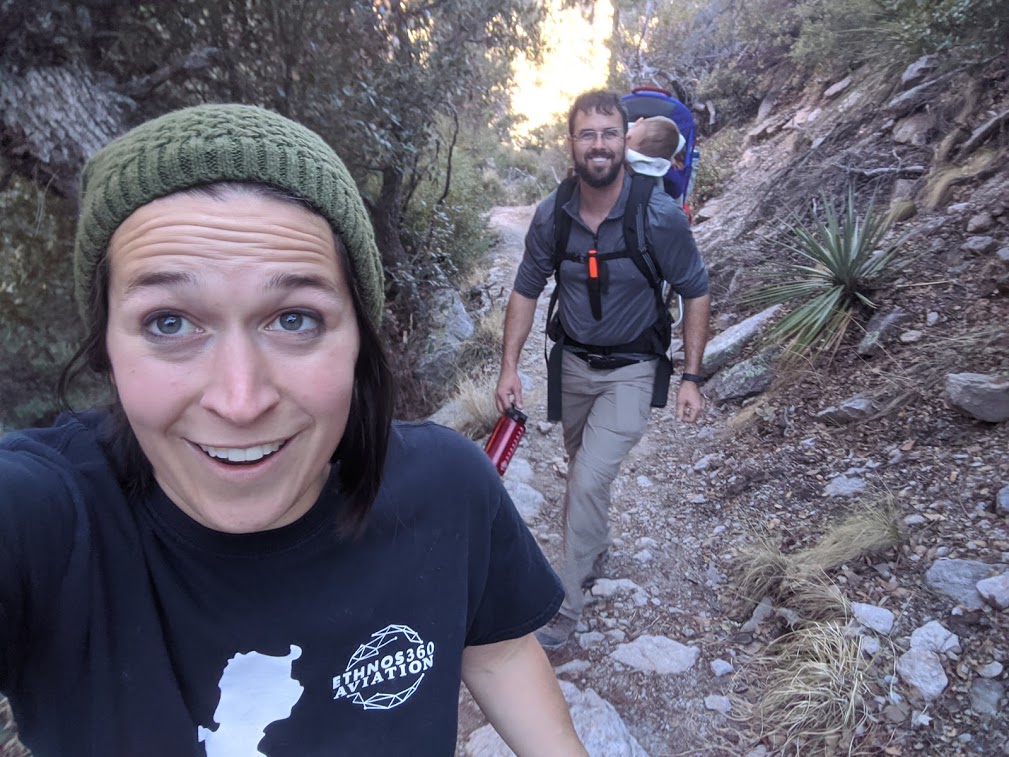
See that sleeping baby? He’s on the same hike we are. He could be working just as hard, too, but it wouldn’t get him any further.

What a great reminder God gave us in little kids, who constantly outdo us in their willingness to relax and trust someone else to carry them. 

There Are Many Moabs: on fake firehouses and the living God

“My heart’s cry for Moab is like a lament on a harp. I am filled with anguish…The people of Moab will worship at their pagan shrines, but it will do them no good. They will cry to the gods in their temples, but no one will be able to save them.”

–Isaiah 16:11-12

It not only broke God’s heart when his own people turned to idols and false gods; it caused him anguish when any people turned to any other god, because all people were created for him.

He crafted each person to search after and find him, to cry to him for help, and it hurts to watch his creation plead for aid from the lifeless shrines they have built to replace him, when he is so willing and ready to rescue the one who calls on him.

It’s like 911 operators are awake and waiting to answer a call for help, but the people in trouble keep dialing the number for an empty building because it looks like a firehouse.

Many, many lifeless gods in every form imaginable have taken the place of worship in human hearts. And we can serve them faithfully and cry out with all the sincerity we can muster and really believe that help is coming, but the building is still empty, and there’s no one to answer the phone.

God’s heart raged over Israel turning away from him: the people who knew 911 and decided dialing a different number was a better idea. And God’s heart broke for Moab, who had never been taught to call 911 in the first place.

Many, many more Moabs still cry out to lifeless gods. Many people are still calling empty buildings that look like firehouses.

Lord, 

Prepare their hearts to turn to you.
Prepare our hearts to remain fixed on you.
Use us to reach into every Moab and teach them who you are. 

You are eager and ready and able to hear their cry and rescue them.


I was ready to respond, but no one asked for help.
    I was ready to be found, but no one was looking for me.
I said, ‘Here I am, here I am!’
    to a nation that did not call on my name.

–
Isaiah 65:1

“God has given us this task of reconciling people to him.  For God was in Christ, reconciling the world to himself, no longer counting people’s sins against them. And he gave us this wonderful message of reconciliation…God is making his appeal through us. We speak for Christ when we plead, “Come back to God!” For God made Christ, who never sinned, to be the offering for our sin, so that we could be made right with God through Christ.”

–2 Corinthians 5:18-21

Undivided Worship: on tearing down temples

“Hezekiah…was twenty-five years old when he became king…He did what was pleasing in the Lord’s sight…He removed the pagan shrines, smashed the sacred pillars, and cut down the Asherah poles. He broke up the bronze serpent that Moses had made, because the people of Israel had been offering sacrifices to it…”

-2 Kings 18:1-4

My trust in the Lord is a most precious thing. Unseen wars are waged against it, constant messages seek to make it shift, even just a little. 

Reading through 2 Kings, I was struck by how many kings of Judah were godly leaders for the most part, but shied away from the bold actions their nation needed from them. They did not actively turn away from the one true God, but they allowed the worship of other idols alongside Him.

2 Kings 18 highlights one king who set things up differently. He stripped away and tore down any other receptacle of worship – even if it once served a good purpose (the bronze serpent), but had since become a replacement for God himself. 

The worship God seeks from us is pure of man’s ideas, methods, and supplements. 

Only Jehovah. Only his word. Only his way.

One king believed in his God enough to tear all the rest of it down, and when the most powerful empire in the world besieged his small kingdom, he was defended by the Angel of the Lord, who extinguished 185,000 warrior lives in the night and swept away the threat encamped outside his walls as easily as a breeze clears away the chaff. 

The massive Assyrian forces had poured across the land, conquering everyone in their path, but small Judah was impenetrable to them because Jehovah would not allow them to harm her. 

Hezekiah did not forge emergency alliances, come up with a back-up strategy, surrender to spare his people, or lay tribute at the altar of any and every god who might come to his aid. He went to Jehovah over and over and over as the situation became more dire. He held his ground and trusted his God, and his God was faithful to defend him. 

Lord,

In my life, may I be the Hezekiah, the Gideon, the Ephesian believers who burned their magic books.

It is not rare to worship you, but it is rare to worship you alone. And you treasure undivided worship.

Show me what else I add and give me the courage to tear it down.  Show me what else I point people to and teach me to use my voice for one message:
We need you, and you alone. Nothing and no one else will ever be enough.

Yet I Want Your Will: 5 words to hold onto when I do not like the plan

“Abba, Father,” he cried out, “everything is possible for you. Please take this cup of suffering away from me. Yet I want your will to be done, not mine.”

-Mark 14:36

Lord, may I learn to decide on these two things:

1. Everything is possible for you.
2. Yet, I want your will.

When things aren’t going my way, may I not falter over whether my problems matter to you or if this is just too complicated or challenging or huge for you to change. You are able and willing on my behalf.

When I consider what I have walked through and what I am facing and it just seems like a bad plan, like meaningless suffering, like aimless wilderness; in the face of brokenness and all that I don’t understand, may I come back to this:

“Yet I want your will.”

Obviously, there’s a part of me that doesn’t. There’s a part of me that wants to skip past the struggle. There’s an urge to take over that rises to the surface when I feel passed over, unimportant, uncomfortable and afraid. But when I consider all the stories you have stepped into and the ways you have worked on behalf of those who trusted you, your plan is what I want. 

So, Lord, help me to remember. Strengthen my heart to wait. Those who have waited through difficulty to see what you would bring on the other side of it have not been disappointed. 

Those who have gazed at all the wealth and luxury and trappings that this world has to offer and then chosen to lay them down and go after you have not been disappointed.

This hope does not disappoint. 

Even Jesus took a long, hard look at what the Father had planned for him and was daunted. But the One who decided, “Yet I want your will,” died and came back from death and rescued those beyond rescue and stands in triumph now.

Saying yes to you is always, always worth what it costs.

So may I walk in his pattern, humble myself when I do not like the plan, and learn these five words by heart:

“Yet I want your will.”

“Yes, everything else is worthless when compared with the infinite value of knowing Christ Jesus my Lord. For his sake I have discarded everything else, counting it all as garbage, so that I could gain Christ.”

–Philippians 3:8

Heavenly Peace? when there’s no rest for the weary

“Then Jesus said, ‘Let’s go off by ourselves to a quiet place and rest awhile.'”

-Mark 6:31


I like this verse. Can I get an “amen” for the take-a-break verse? Let’s go off by ourselves to a quiet place and rest awhile. Good. plan. Jesus. 

He’d been serving all day. He hadn’t eaten. The people were non-stop. It was time for a pause. He got in a boat. He sailed away. Up to this point, I’m tracking with him. Yep, follow Jesus’ example. When you get too tired of the people, go get some rest so you can have a fresh start! 

But then.

Then the people figured out his plan and ran ahead to meet him on the other side. I read the verse and my insides wailed for him. 

No, no, no, no, just give the man ONE SECOND, you needy, annoying people!!!

But that is not how Jesus responded. 

This chapter in Mark is famous. It’s the one that describes how Jesus took one boy’s lunch and fed 5000 families. But I think there’s another miracle in this story – one that happened so swiftly and so subtly it’s often overlooked:

“Jesus saw the huge crowd as he stepped from the boat, and he had compassion on them…”

-Mark 6:34

The needs were so constant he couldn’t even get a meal in. They followed him everywhere on foot, so he arranged to travel by boat to get away from them. He wanted a quiet place and rest. He got a crowd of people asking for more. 

He stepped off the boat, recognized his plan was ruined, and in that moment of realization, his heart cared for them more than it cared for his break. 

The Greek translates it this way: “He was moved in the inward parts to feel compassion for them.”

He moved toward them. And not just outwardly. 

I often do what is necessary externally, but pull away on the inside. I sigh and shake my head and move toward the needs before me, but with a frustrated and resentful heart. It was not so with him.

Jesus didn’t plan to endlessly meet needs. He recognized that he needed rest. He chose to pause ministry and step away to recharge. But when that pause was interrupted – he was willing for it to be. When the boat ride was all the break he got, he took it and moved on, without a fit, without any harsh words. And with a gracious heart, he turned toward the people and the work before him, instead of back to the idea of the rest he had been hoping for.

Lord,

Work this miracle in me. Give me wisdom to plan for rest, but grace to receive the work I’m given when it comes unexpectedly. Train my heart to accept the boat-ride breaks with thankfulness and to readily feel compassion for the people you place before me in those interruptions that make me want to retreat.

Help me to see that, in the same way, you are moved with compassion for me. 

After all, this time of year is all about remembering how glad I am that your heart decided to move toward my need.

Tired Hands: on getting a grip when you feel defeated

This week, Cody pointed out that he has been observing a lot of self-condemnation in the way I talk about my day, and I was challenged to dig into these statements and decide how much was truth.

From how the baby napped to forgetting the espresso maker was running because I got interrupted; from my reaction to the dirty dishes to my inner wrestlings over cooking dinner again, I tend to observe how I walk through each experience and label it as another failure.

I’m always trying to improve, so I didn’t see a real problem with focusing on what could go better, but I’m learning that when that evaluation leaves me defeated, I may be listening to the wrong voice.

“For the accuser of our brothers and sisters has been thrown down to Earth – the one who accuses them before our God day and night. And they have defeated him by the blood of the lamb and by their testimony.”

–Revelation 12:11-12

I have an enemy that drags up the past, day and night, in hopes of discouraging and defeating me; but the blood of Jesus Christ has paid for it all. There is zero outstanding debt. The accuser is the one who is defeated, not me.

The word “testimony” in this verse comes from the greek word martyrias which also means “evidence” or “record.” 

The enemy is defeated by the very record he tries to throw in my face. 

Because of the cross, the enemy accuses, but the record is clean.

Regardless of how I feel about myself, the record is clean, and God is not asking me to dwell on how I should have done better. I will never on this earth perform perfectly. Can I be content with God’s ability to forgive, forget, and use me in spite of my failures? Can I believe him when he says I am free to move on?

In a thousand situations, I would like to take my hindsight and have a re-do. In many others, I don’t like how it went, but I don’t actually know what I should have done or said instead. I have not walked perfectly, and I will not walk perfectly, but the record is clean.

God’s desire for me is to walk in freedom, confident of what he is able to do rather than carrying stress over whether I will ever get it right. He is NOT the one asking that question. 

“So take a new grip with your tired hands and strengthen your weak knees. Mark out a straight path for your feet so that those who are weak and lame will not fall but become strong…Look after each other so that no one fails to receive the grace of God…Be careful that you do not refuse to listen to the One who is speaking.”

–Hebrews 12:12, 18, 25

When I become aware of my falling and my weakness, may I learn to listen to the Lord when he speaks.

Because he does not speak of grace and hope and strength and then say, “but these do not apply to you; these are for people facing harder things, these are for people who haven’t screwed up.”

His grace is for every weakness. His hope is for every struggle. His strength is for every hardship.

He does not make me aware of my issues to make me feel disqualified but so that he may infuse my hollowness with his fullness and brace the joints that would give out and encourage my heavy heart and my tired hands to take a new grip. His instructions mark out the path ahead, not to intimidate me, but to help me press on with sure footing. 

His desire is not that I would never, ever fail; but that I would never, ever fail to receive his grace. Grace he is always holding out, like a steady hand when I’m walking with a limp, like a fresh, solid grip when my hands are tired. 

Grace that says: 
“The enemy accuses, but the record is clean.
Don’t listen to him. Don’t even listen to yourself. Listen to me.”

How Not To Love: on how hidden attitudes flow outward

“I am writing to remind you, dear friends, that we should love one another…” 
(2 John 5)

“…see to it that you really do love each other intensely with all your hearts.”
(1 Peter 1:22)

Be Nice

Over and over and over, God’s Word gives this instruction: “love one another.” It’s the second most important thing we’re given to do with our entire lives.

But I think I actually live more in terms of “be nice.” I put all sorts of effort into my outward interactions with people, but tend to be careless with my heart attitudes toward them. In fact, I often don’t recognize that my heart attitudes are TOWARD anyone at all.

Here’s the hard truth: My heart attitudes are not isolated. They never only affect me. They are always toward someone, and they always flow outward: into my body language, into my actions, into my words. Hidden attitudes don’t stay hidden.

When I grow frustrated over what I don’t have in comparison to someone else, I am not only sowing discontent in my own heart, I am placing myself in a rivalry with and nurturing hostility toward another person because they have enjoyed an advantage. When I grow exasperated because someone is making me wait, I am not only giving into impatience, I am giving into the lie that the person I am waiting for is not worth it. And the hostility will surface. And the irritation will surface.

Whether I intend it to or not, the attitude my heart adopts toward other people will flow outward. 

The List

So I have been asking the Lord to help me identify when I am handling another person in an unloving way, even if it’s only within my own heart. I reviewed 1 Corinthians 13 with the filter of “how does this look at the thought level?”, and came up with this list of How Not to Love:

I am NOT loving another person when I:

  • allow my heart to see them as a rival 
  • refuse to celebrate when they have been given something good
  • become irritated and impatient with them because I have let their pace fuel my worry
  • remember, revisit, and rehearse how they have been hurtful to me
  • nurture expectations of how they will care for, pour into, or benefit me

How beautiful it would be to notice something better in another person’s life and feel zero negative emotions about it, because I finally get that it has nothing to do with what I have or don’t have. It has everything to do with whether I love the other person or not. And love celebrates the joys of others, so love is not jealous.

When I rehearse what has been hurtful, I have become the one that hurts. And love knows the record only does more damage, so love keeps no record of wrong.

My exasperation has little to do with what time it is, and much to do with whether I value the person I am waiting for. And love places immense value on others, so love is patient.

As I step into a room and gauge my expectations, I often find that I am greedy for the attention, energy, and care of the people standing in it, even when I thought I came with the best intentions. When I lean forward in expectation or lean away and lick my wounds, I am not loving them. When love leans, it leans in offering, because love does not seek its own.

If this is love, I don’t love very many people at all. I’m nice to them outwardly, but I do not love them. 

But if I could learn this love, how free I would be!

If this is how I handled people internally, I wouldn’t have to think very hard about how to interact with them on the outside. If I made the hard choice to love them with the thoughts of my heart, it would flow outward. And my joy would not be slave to what other people have or how other people handle me.

A Prayer

Lord,

Even when you are wronged and treated as unimportant, your love forgives so easily and freely. It is generous; it is gentle; it does not demand attention. It is a beautiful thing to behold. 

Teach me to learn this love. Help me to see how thoroughly you cherish me, so that I find my soul settled, for it knows it does not have to chase after how other people see me or treat me.

May I shrug off my slavery to what other people have and what other people do, carefully tend to the attitudes of my own heart, and little by little, start to understand what it means to love one another from the inside out.