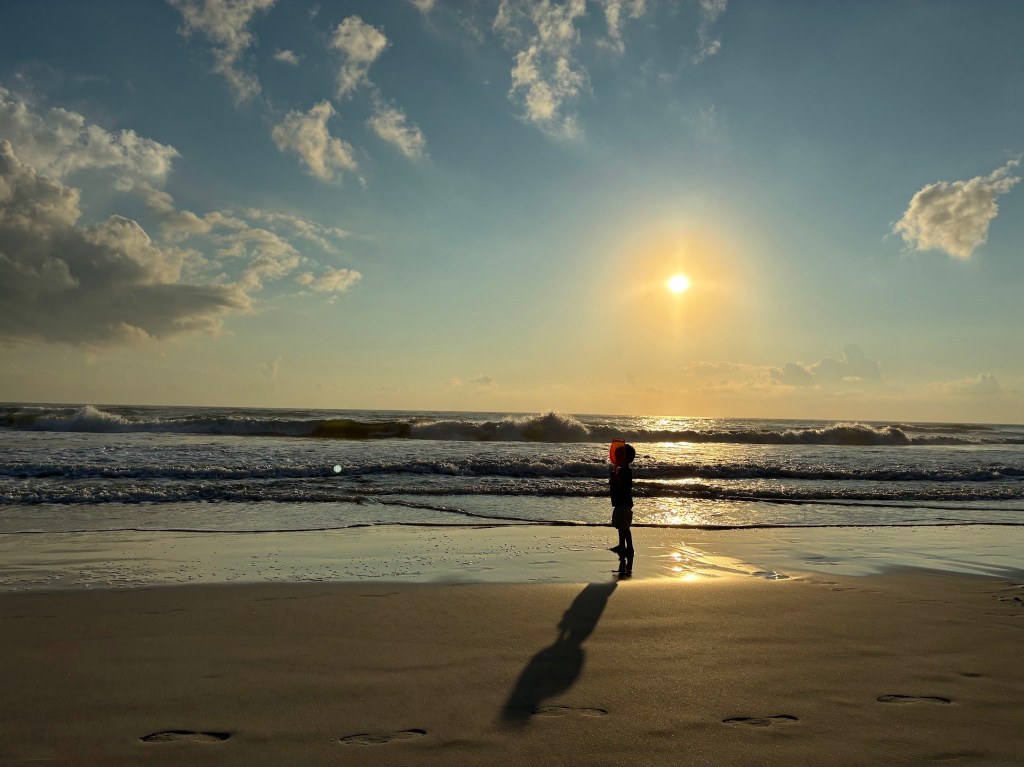
Jericho: walking uncomfortable circles

“Now the gates of Jericho were securely barred because of the Israelites. No one went out and no one came in.”

Joshua 6:1

Two weeks remained before our move-out date.

It had been an exhausting day of preparation and logistics. Managing the medical needs of our family at baseline is challenging, but setting up the infrastructure for our almost-four-year-old’s care, follow-up and services four states away had proven to be loads of paperwork, phone calls, and unresolved pieces that would just need to be handled in person when we arrived.

A few days ago, we’d gotten our immediate housing figured out – a rental 25 minutes away from our property.  We both felt a hard-to-explain peace and confidence about taking this next step closer to our land and doing it now – this very month. But at the same time, my logical (anxious) brain wondered, what are we going to do once we get there? We still won’t be prepared to start building a house, we’ll just be more exhausted than we are now, working to get all the every-day life stuff set up again in a new place, and living closer to a property we don’t yet have the means or the wisdom to build on.


Nearing bedtime, we collapsed on the couch together with the kids and pulled out a Bible Verse storybook my mom had gotten them for Christmas. 

We opened to where we had last left off, and the page read:

“Be strong and courageous. Do not be terrified; do not be discouraged, for the Lord your God will be with you wherever you go.”
-Joshua 1:9

Then, it continued:

“After forty years in the desert, the Israelites were finally ready to enter their Promised Land. The first city they came to was Jericho. It was surrounded by walls and looked impossible to enter!”

Cody and I looked over the top of the book at each other and wearily grinned. They’d wandered in the wilderness, they’d finally reached their land, but actually entering it looked impossible. This was the right story for today.

As we continued through the story of Joshua and the Israelites getting up and walking around the city day after day, and then watching God keep his promise to bring the mighty walls down right before their eyes, my heart was moved. I think we’re supposed to get up there, and just walk around the border of our land. We should do it seven times, just like the Israelites did. I think before we try to move anything forward, we should just walk around it, and take stock of how we need the Lord to do what we cannot.

I finished the story and looked at Cody as I closed the book.

“I think when we get up there,” Cody smiled, “we should walk around the border of our land seven times.”

I laughed out loud. “I had the same thought!”

A week later, I had just finished a run to the song, “The Battle Belongs to You.” I stopped to stretch as I sang along and began praying over all the things. The move, the medical care, Benaiah’s headaches, Cody’s headaches.

I got on my knees.

The missionaries we would be listening to and hosting and caring for, the deep hurts people carry, my kids leaving their friends, the land, the preparation to build a house, the costs coming up. Would it work out? Where would we even start? “Lord, I can’t make it all work. It has to be you! This is your battle, I’m not strong enough.” I prayed.

When you get up there, walk around your land seven times, and ask me to bring down the walls that stand in your way, the thought came again.

I started to cry.

“Cody,” I looked at him as I walked into the house and pulled off my headphones, “I had that walk-around-the-land-seven-times thought again. Do you think we really should? How far around do you think it even is? I’m thinking we should set aside our first seven weeks in North Carolina,” the words were spilling out now, “and take the kids with us, and go every Wednesday morning and walk around the whole border and just beg the Lord to fight the battle for us. We need Him to do this, not just the house build, but everything that follows. Every heart battle that takes place there, every discouraged and weary soul who comes to rest and get their bearings – they’re in a fight that you and I don’t have the power to fix or help with. But He does and we need to ask Him to do it. If we are to have any hope of making a difference, it has to be Him, only Him! But walking all the way around the border that many times is a lot, I don’t know, what do you think?”

“I was serious the first time,” Cody replied. “What do we have to lose? It can only help to set aside that first seven weeks and get our hearts in a place of recognizing we need Him.”

Later, I called my sister to tell her our plan. “We’re calling them the Jericho Weeks, Debby, and you can come, too, if you like, and pray with us.”

“You know what all that walking will do, Beka?” she asked.

“What?” I wondered.

“It will make a path.”


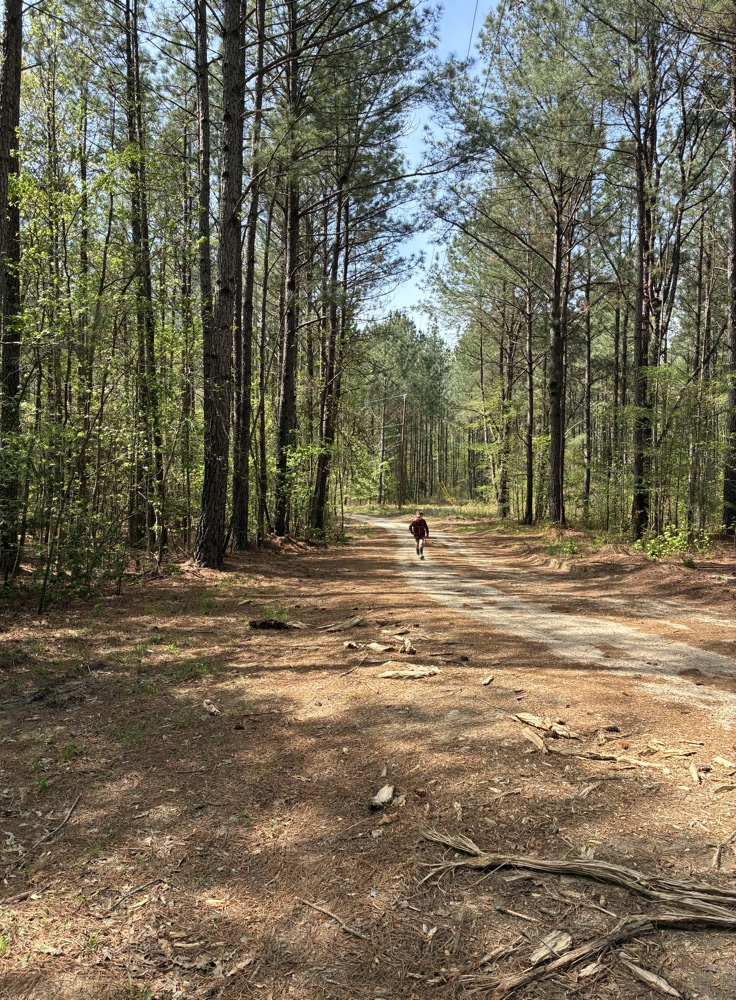
We are 5 weeks into our time here in North Carolina and our family has walked what we now call “the Eremos mile” five times. Our Jericho circle treads through creeks, thorns, wetlands, swamp, and hilly forest. And not one time has it been easy. I have developed a new sympathy for the fatigue the Israelites may have felt when they roused to go out for lap four and five.

As they marched out of camp day after day for another long walk around the city, I imagine the men of Israel might have quietly wondered what it was accomplishing. God told the priests and the fighting men to walk around an impenetrable wall once every day for six days. Then seven times on the seventh day.  Each soldier and priest surveyed every inch of that wall on foot, not once, but thirteen times. The frustrating wall was constantly in their field of view as they walked. They got to really take in how solid it was as they spent their energy circling but never besieging. Looking but not fighting. Slowly, day after day, they walked and they looked and they knew. There was no way in.

It reminds me of another moment in their early history as free people escaping Egypt.

It took place at the Red Sea, where God led them on purpose to a place with no exit route. But it’s not the moment they walked through the sea on dry land that I’m talking about – it’s the waiting before the path opened up. God didn’t open the waters in the nick of time, as Pharoah crested the horizon, while he was still too far away to catch up. God allowed the Egyptian army to come and make camp.

“Then the angel of God, who had been leading the people of Israel, moved to the rear of the camp. The pillar of cloud also moved from the front and stood behind them.  The cloud settled between the Egyptian and Israelite camps. As darkness fell, the cloud turned to fire, lighting up the night. But the Egyptians and Israelites did not approach each other all night.”

-Exodus 14:19-21

Every man, woman and child in Israel waited on the shore, hour after hour, feeling in their very bodies the impossibility that spread in front of them in the form of the vast sea, and the uncomfortable reality of the enemy camp nearby. There was no way across. And all night the Egyptians were there, but the Lord stood between, not allowing them to approach.

Before He opens a path, I think sometimes the Lord gives me time – deeply uncomfortable time – to take stock of how impossible that path is. I hate that, because I’d rather focus my energy and attention on an area of my life where I feel like I have some control, than circle and circle and constantly hold in my view a situation where I need help and I don’t know how to make headway.

What are all these laps accomplishing? It’s not that walking around walls contributes to what God is doing in some way. Sometimes, “trust in the Lord with all your heart and lean not on your own understanding” may look like obeying something that makes no sense and produces no progress, just because He told you to do it, and you trust Him.

And perhaps in the walking, the reality of my need sinks deeper and deeper into my heart with every lap until I have finally released the idea that I can work out this problem on my own. I think the longer I walk, the more my heart strains upward, a deep and solemn knowing settling over me that there is no other way, except that the Almighty might reach down and do something – I am at His mercy. But that is a beautiful and profound place to come to, because His mercies run fresh all the time. I am always met with mercy and grace to help me when I come boldly to his throne in my need. And as I obediently walk in circles around the impossible or stand still on its shoreline, perhaps by that seventh lap, on that seventh day, I am ready to die to my own strength.

And that is what prepares me to walk forward in His.

Sometimes those exhausting holding patterns in our lives are training the very thing that is straining against them.

The Lord said to Gideon, “You have too many warriors with you. If I let all of you fight the Midianites, the Israelites will boast to me that they saved themselves by their own strength.” 

-Judges 7:2

“Be strong in the Lord and in His mighty power.”

-Ephesians 6:10

God hasn’t said to Cody and I that the walls will fall down, but we feel His prompting to go walk out this story in a similar vein to the Israelites long ago. What will happen after the seventh circle on the seventh day? We don’t know. Maybe nothing. I hope we see Him more clearly.

And as we press into the unknowns ahead of us, we will have spent seven weeks and thirteen miles in the uncomfortable, necessary work of reminding our hearts

That we are not enough, and that He is.

That we cannot make a way, but that He can.

That this is too hard for us, but that nothing is too hard for Him.

And that is the place we want to kneel before we stand and walk into the next step. May we get low in the waiting and die to our own strength. Then may we stand up, and stand firm, according to the power that is at work within us.

“That He would grant you, according to the riches of His glory, to be strengthened with might through His Spirit in the inner man,  that Christ may dwell in your hearts through faith; that you, being rooted and grounded in love,  may be able to comprehend with all the saints what is the width and length and depth and height—  to know the love of Christ which passes knowledge; that you may be filled with all the fullness of God.

Now to Him who is able to do exceedingly abundantly above all that we ask or think, according to the power that works in us to Him be glory…”

-Ephesians 3:16-21

“Have you never heard?
    Have you never understood?
The Lord is the everlasting God,
    the Creator of all the earth.
He never grows weak or weary.
    No one can measure the depths of his understanding.
He gives power to the weak
    and strength to the powerless.

 Even youths will become weak and tired,
    and young men will fall in exhaustion.
But those who trust in the Lord will find new strength.
    They will soar high on wings like eagles.
They will run and not grow weary.
    They will walk and not faint.”

-Isaiah 40:28-31

You Don’t Have a Bucket: when what we need feels out of reach

“If you knew the gift of God, and who is saying to you, “Give me a drink,” you would ask Him, and He would give you living water.”

John 4:10

There’s a lot more than I’m used to going on right now.

As we push out of survival mode and into the direction we’ve been given, I often wrestle with fear that it’s all too much and I hoped a little too big.

We bought land and built a driveway, expecting to move to the forest and use it pour into people. But so far, we’ve felt unexpected leading to wait on construction. I thought we’d be building a house now. Instead, we are building a bench. A place to sit in the quiet and meet with the Lord.

It’s a solid place to start. That’s the whole heartbeat of the project. But I also thought more of a plan would have come together at this point, and it’s easy for me to strain over why we don’t have in place the clarity, direction, and resources to be doing more yet. I’m content to just walk forward and do the next thing. I can be okay with waiting or with the Lord doing something entirely different. We’re His and so is the land. I just wish I knew what to expect. Sometimes, I ache for the answers.

I’m preparing to travel overseas, to pass on or pack up our belongings. To grieve and to encourage. To try to love on our team there, say goodbye well, and press into what’s next whole-heartedly. I’m trying to set my family up for when I’m gone, homeschooling my first grader, driving kids to appointments and classes, balancing training with our new role with continuing to serve at the Homes Garage. The scan to check if my tumor has come back is next week, my son’s brain scan is a few days later, the plants are dying and need water, my kids put a towel in the oven, we’re potty training and I’m mopping up an accident while teaching addition.

And then my three-year-old hid my keys. (I think).

By morning, I still hadn’t found them, I had forgotten to ask Cody to leave me his truck key before he left for work, it was time to leave for an appointment, I’m getting shoes on the kids, my calls aren’t going through, and it was bucketing rain. I needed my keys and I couldn’t find them and my full plate felt like it was starting to crack. Ever been there?

Is it the keys I really need? Is it the answers?

I’ve been going through the Gospels over the last month and paying attention to people’s objections when Jesus invited, offered, or told them to do something.

Jesus: “Peter, go out into the deep water and let down your nets for a catch.”

Peter: “Lord, we’ve worked hard all night and caught nothing, but if you say so…” (Luke 5:5)

Jesus: “Would you like to get well?”

Sick Man at Bethesda: “I can’t, for I have no one to put me into the pool!” (John 5:2-9)

Disciples: “This is a remote place, it’s getting late, send the crowds away.”

Jesus: “that won’t be necessary, you feed them.”

Disciples: “But we only have 5 loaves and two fish!”

Jesus: “Bring them to me.” (Matthew 14:15-18)

Over and over, I saw people identify that their supply was exhausted and that what they needed was out of reach. Just like I do. Over and over, people missed that the One they were talking to WAS what they needed. Just like I do.

My favorite was the woman at the well:

Jesus: “If you only knew the gift God has for you and who you are speaking to, you would ask me, and I would give you living water.”

Woman: “But sir, you don’t have a rope or a bucket, and this well is very deep. Where would you get this living water?” (John 4:10-11)

Can you imagine? The One who holds the oceans in the palm of his hand offered to give her living water, and she told Him He actually couldn’t be of help because He didn’t have a bucket.

She told God He couldn’t reach what she needed. Just like I do.

But He caused fish to swarm their nets, He cured a thirty-eight year illness without moving the man to the pool, and He satisfied thousands of guests from one boy’s lunch without running out for refills.

And He had the stories of what He did written down over and over for us to rehearse, because through them, He says, You don’t actually need to reach what’s over there. I’m right here. You don’t need the pool. You need me. It doesn’t matter how deep that well is, I am the wellspring of life. I don’t need a rope or a bucket, or a new fishing spot, or fresh, rested workers. I don’t need to go get more ingredients, I don’t need to be able to reach the shops, I don’t need more than what you have right here and right now. You might need a breather, but I don’t. Because I am your supply. It’s me. I’m here. I am what you need. Don’t tell me what I can’t do. Just ask me to help.”

I’ve been fighting feelings of overwhelm, lack and confusion. I’m hitting the limits of what I can predict or expect, and realizing over and over that I just don’t have the control or power to bring about what I’m hoping for. But the more I’ve gotten to know mature believers, the more I realize many of them are also carrying question marks toward what’s ahead.

Our culture hates a question mark. We cherish specific, measurable, attainable goals with a deadline. We love a plan we can wrap our minds around. We’re more comfortable with a God who needs to use a bucket and rope to reach water, just like we do, maybe just a little stronger. We don’t know what to do with the real thing.

But I’m realizing those question marks are not a problem. They’re the mark of humility. They’re the mark of a soft heart that’s willing to change course as the Spirit leads. They’re the mark of wisdom that has learned we serve a God that is beyond our understanding, and with all we have learned about Him, we still cannot fathom what He will do next.

And so I will fight my temptation to object when He leads me somewhere confusing and I don’t see the supplies I think I’ll need. I can respond with an objection or with a question mark. With a demand or with humility.

Will I say, “But you don’t have a bucket!”
Or will I say, “Lord, this is a question mark for me. I have no idea how you are going to give me water, even without a bucket. But I know you don’t need one. Please be my supply. Please help.”

As I take stock of the pressures and worries of my heart, where do I object? Where am I telling God that He doesn’t have a bucket? Where am I complaining that what I need is out of reach? What would it look like to let go of needing to understand when and how He’s going to fix it, to mark that situation with a question mark, and bring it to Him for help? What changes as I get still and remember that He is who He says He is and that this is not too hard for Him?

Oh Lord,

May these moments of reading about you questioning, inviting, testing, and challenging people; then watching you overcome lack, limitation, overwhelm, weariness and depth put to rest my objections for the sake of “If you say so, Lord.”

May what you have to say always be enough for me.

I have been drowning in objections, but I am listening. I feel in over my head. But nothing is too hard for you. You always have more than enough to give.

Jehovah Jireh.

May I not strain to bring things together, but breathe and wait for you to work.

“Be still in the presence of the Lord,
    and wait patiently for him to act…”

Psalm 37:7

I don’t HAVE to reach here or there. Lord, I feel all these pressures to meet other people’s needs, to meet my own. But they don’t NEED me. They need you. And you have it in hand. So it has to be you, Lord.

“…So this joy of mine is complete. He must increase, but I must decrease.”

John 3:29-30

Please give what I do not have to give. Please come provide what I cannot provide. Please let your power rest on me in my weakness. Please pour out living water, given without measure. Help me to listen to your Spirit. Guide my steps. Teach my heart. Lead me into all truth. I need you. I need wisdom. Please give it liberally, as you promise to. Help me to recognize it and lean on it. Help me to perceive your voice – and then, not to object. Because if you say so, that is enough.

There is no greater wisdom than to do something, just because that’s what you said to do. I don’t need to be able to make sense of it or explain it.

Lord, root out my unbelieving objections. Teach me to replace them with question marks, and allow those unknowns while I wait on you. I don’t know what’s ahead, which way to go, or have control. Teach me still to hope, while letting go of my need to claim specifics I don’t have. I can accept that there are unknowns I have no way of clearing up until I reach them, and yet I do not have to fear them. To admit I do not know what is coming is not the same thing as fearful timidity. I can do it with humble boldness.

Because You are there. Out in front, in the future, on the waves, in the dark, beckoning me to follow even though You have not shown me what you will do or how you will rescue.

You do have control. You do know the future. You are writing it. Nothing is too hard for you, so I will not be afraid.

I can get before you, right here, where it feels like it’s time to send the crowd away because I don’t have enough. I’ve worked hard all night and caught nothing and I’m spent. I don’t have a bucket. I can’t reach the pool.

And you will say, “But I am here. I am with you. Don’t worry. Stand still and watch what I will do.

Oh, how great are God’s riches and wisdom and knowledge! How impossible it is for us to understand his decisions and his ways!

 For who can know the Lord’s thoughts?
    Who knows enough to give him advice?[l]
And who has given him so much
    that he needs to pay it back?[
m]

For everything comes from him and exists by his power and is intended for his glory. All glory to him forever! Amen.

Romans 11:33-36

Who else has held the oceans in his hand?
    Who has measured off the heavens with his fingers?
Who else knows the weight of the earth
    or has weighed the mountains and hills on a scale?
13 Who is able to advise the Spirit of the Lord?[c]
    Who knows enough to give him advice or teach him?
14 Has the Lord ever needed anyone’s advice?
    Does he need instruction about what is good?
Did someone teach him what is right
    or show him the path of justice?

15 No, for all the nations of the world
    are but a drop in the bucket.
They are nothing more
    than dust on the scales.
He picks up the whole earth
    as though it were a grain of sand.

Isaiah 40:12-15

 “Then Job replied to the Lord:

“I know that you can do anything,
    and no one can stop you.
You asked, ‘Who is this that questions my wisdom with such ignorance?’
    It is I—and I was talking about things I knew nothing about,
    things far too wonderful for me.

Job 42:1-3

On Dread & Distance: Biblical guidelines for how to respond to the Coronavirus Pandemic

Dread: Psalm 91

“Do not dread the disease that stalks in darkness…”
— Psalm 91:6

The first instruction I want to consider is the one that reminds me to turn my heart to the Lord and entrust my life to Him. He gives instructions to tend to my heart (Proverbs 4:23), to let his peace rule (Colossians 3:15), and to not let myself be overcome by dread or terror.

More on that later.


Distance: Leviticus 13

“Those who suffer from a serious skin disease must tear their clothing and leave their hair uncombed. They must cover their mouth and call out, ‘Unclean! Unclean!’  As long as the serious disease lasts, they will be ceremonially unclean. They must live in isolation in their place outside the camp.”
Leviticus 13:45-46

Social distancing, quarantine and isolation protocols were actually God’s idea! All the way back in ancient times, he gave Israel instructions to keep those who were contagious separate from the living quarters of the main community, and to have them warn others in an obvious way so they didn’t get close enough to contract skin diseases unwittingly.

It’s important to set my heart on the Lord and trust in his protection so that I don’t react in a panic; but it’s also wise to practice thoughtful caution once I recognize that an illness has a propensity to spread.

Even Jesus, when presented with the promises of protection outlined in Psalm 91, refused to use them as an excuse to be reckless and put that protection to the test.

This virus is an extremely effective traveler! Not only does it spread by air droplets, but a recent study found that live COVID-19 virus was still detected up to 72 hours after application to plastic and stainless steel surfaces.

Rather than labeling the limiting measures that are being put in place as giving in to fear, I’m recognizing that it can actually be an act of love to lay down my freedoms and my plans in order to protect the health of those who are more vulnerable than I am. We can’t control every factor, but if our actions can help to limit how many people an illness affects, we may count those hard choices a worthwhile sacrifice.

God is absolutely able to deliver us from disease, just as He protected Israel from all the plagues that assaulted Egypt; but he does not promise believers immunity or an immediate fix for the physical struggles we face. He promises to deliver us eventually into a life without sickness, without pain; and to walk with us through all we face in the meantime.

“The Lord says, “I will rescue those who love me.
    I will protect those who trust in my name.
When they call on me, I will answer;
    I will be with them in trouble.
    I will rescue and honor them.”

Psalm 91:14-15


Why does Coronavirus Makes Some People So Sick?

The COVID-19 virus attacks lung tissue. Most people present with mild respiratory symptoms and then recover; their body deals with the virus, then rebuilds the damage. But in some people, the sick who take a turn for severely sick, it’s not directly because of damage done by the virus. It’s because of something called a cytokine storm.

As the virus damages lung tissue, the cells send out a chemical distress signal (called cytokines) that draws immune cells to the damaged site to help. In some patients, this cytokine release prompts an overreaction of the immune system. Instead of “sniper mode,” where the white blood cells target and ingest foreign bodies, or the killer T lymphocytes scan for markers they recognize as belonging to the virus and kill only those cells; the body switches to “guns blazing” mode.

The immune cells flood the area in trouble, destroying any and all tissue in their path in an over-the-top campaign to save the rest of the body. The virus is taken out in the cross-fire, but so is the viable lung tissue that was still getting oxygen to the bloodstream.

The immune system was only trying to get rid of the threat, but in the process, it compromised the body’s ability to breathe. Those are the patients that end up on a ventilator, trying to oxygenate a body whose lungs have become a warzone. In the sickest patients of all, this hyperactive response of the immune system even damages the liver and kidneys, causing multiple organ failure.

A Microscopic Analogy for Fear

While learning about this disease process and immune response, I was surprised at what a good picture it was of the destructive nature of fear.

Wisdom and caution are excellent guides to our thoughts. But when we start to use fear as the basis of our decisions, it’s like a runaway immune system whose overreaction can compromise the body’s ability to breathe.

We must weigh each choice, each issue with care and calm, and thoughtfully take such measures as we deem necessary. But when we get in a panic and start overanalyzing and overpreparing, rushing on the outside and running in circles on the inside; when we try to control what we cannot control; when we turn inward toward ourselves for solutions instead of outward to our God for help, we are the immune system who is overreacting.

We have stopped targeting and started blindly launching missiles and wildly throwing grenades. As collateral tissue is destroyed in the lungs, fluid begins to leak in, drowning the patient. As we give in to fearful thoughts, they open the gateway to more fearful thoughts, and we drown in them.

And so God lovingly instructs us not to live in dread.

So Practically,  What Do I Do?

The Lord has given me a strong warning not to think like everyone else does. He said,
“Don’t call everything a conspiracy, like they do,
    and don’t live in dread of what frightens them.
Make the Lord of Heaven’s Armies holy in your life.
    He is the one you should fear.
He is the one who should make you tremble.
He will keep you safe…

Isaiah 8:11-14

When our thoughts are tempted to lean into an exaggerated response, may we learn to firmly place them on the One who is worthy of our attention and worship. It is often in walking through darkness and disaster that we get to know him most. In sickness, in peril, in struggle, in discouragement, in deep and miry pits, we find Him faithful.

I waited patiently for the Lord to help me,
    and he turned to me and heard my cry.
He lifted me out of the pit of despair,
    out of the mud and the mire.
He set my feet on solid ground
    and steadied me as I walked along.
He has given me a new song to sing,
    a hymn of praise to our God.
Many will see what he has done and be amazed.
    They will put their trust in the Lord.
Oh, the joys of those who trust the Lord…

Psalm 40:1-4

So, be wise. Be careful. Prepare prudently. Do all you can to protect others. And when you have done all you can do; do not fear what you cannot control. Do not allow fear to turn you inward so that you only see yourself, your inconveniences, and your losses. Look up. Look out. Press into our Savior. See those He has called you to love. Let Him lead you in how.

However this plays out, we will look back and see that He led us well. May we also look back and see that our words and actions in the midst of crisis were characterized by the One who lives and rules within:

Loving, joyful, peaceful, patient, kind, faithful, gentle, self-controlled.


References:

  • Aerosol and surface stability of HCoV-19 (SARS-CoV-2) compared to SARS-CoV-1, NEJM Original Article, Contributors: Neeltje van Doremalen, Trenton Bushmaker, Dylan H. Morris, Myndi G. Holbrook, Amandine Gamble, Brandi N. Williamson, Azaibi Tamin, Jennifer L. Harcourt, Natalie J. Thornburg, Susan I. Gerber, James O. Lloyd-Smith, Emmie de Wit, Vincent J. Munster   website: https://www.medrxiv.org/content/10.1101/2020.03.09.20033217v1.full.pdf


Related Reading

5 Steps to a Light Heart in a Season Heavy with Coronavirus Concerns
Buy A Field: on normal in the midst of crisis
Rags, not Rope: on kindness in crisis