This Far: why you can face the next thing

“Don’t you know that your body is a temple of the Holy Spirit who is in you, whom you have from God? You are not your own, for you were bought with a price. So glorify God with your body.”

-1 Corinthians 6:17, 19

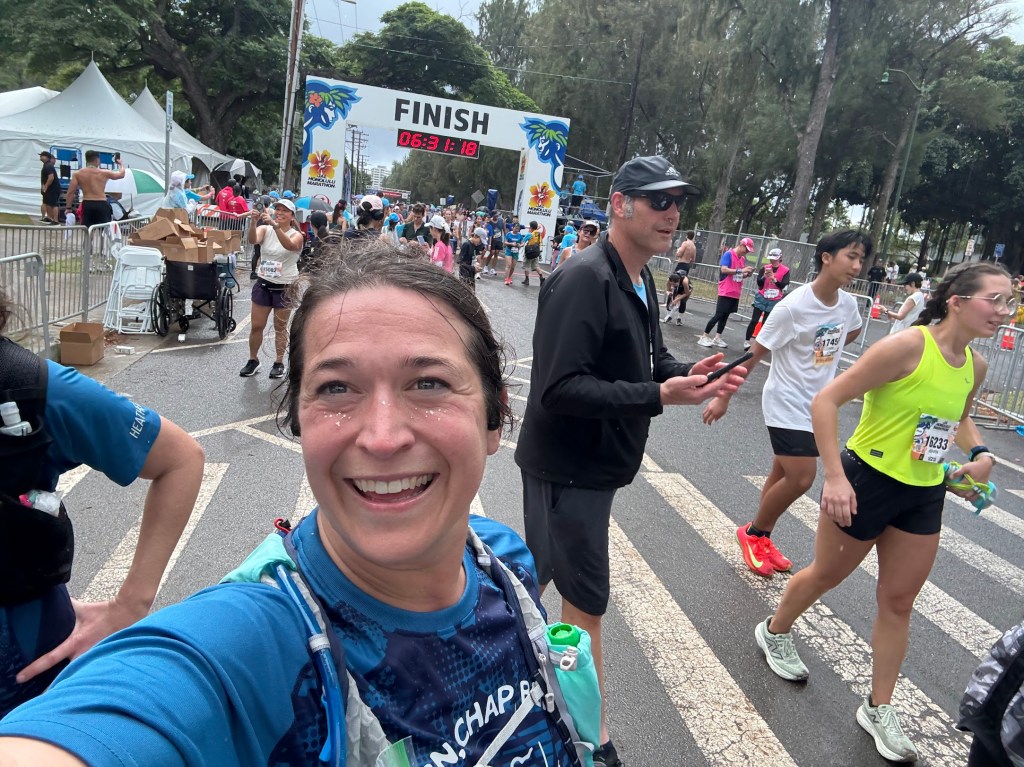
I read this verse a week ago – the day before I lined up for my first marathon – and I chuckled.

Three years ago I was in the ICU. Last December, I was in surgery to remove a salivary gland tumor. I’m still managing a heart arrhythmia, POTS, endometriosis, copper deficiency, and a touch of asthma. Putting my body on a 26.2 mile race course sounds like a bad joke.

And yet, these last three years have taught me that “glorify God with your body,” is not the same thing as, “be the best, the fastest, and the strongest.”

“…God’s weakness is stronger than the greatest of human strength. Remember, dear brothers and sisters, that few of you were wise in the world’s eyes or powerful or wealthy when God called you. Instead, God chose things the world considers foolish in order to shame those who think they are wise. And he chose things that are powerless to shame those who are powerful.  God chose things despised by the world, things counted as nothing at all, and used them to bring to nothing what the world considers important.  As a result, no one can ever boast in the presence of God.

-1 Corinthians 1:25-29

It is often in my weakness and my lack that people get to see Jehovah showing Himself strong – coming to my rescue when I have nothing left, answering desperate prayers whispered in the dark, restoring, strengthening, and quietly encouraging my heart to keep going when the storm doesn’t let up and the hard path before me stretches out longer than I can see.

He doesn’t need me to be the best. He already is the best, and He can show it through my life as I invite Him into my weakness. Our God shows Himself strong on our behalf, not just by enabling us to make impressive performances, but by empowering us to walk through struggle with impressive grace.

And when He asks us to glorify Him with our body, I think He means with the one He’s given us. Yes, that one. Worn, fatigued, broken, and not working like it used to, but this is what we’re called to show up in.

Sometimes, these bodies of ours are like Gideon’s 300 men. They’re not the presence and strength we wanted to go into battle with; they’re what’s left when so much of what we started with is depleted and lost. But for the One who can do anything, this little we have to offer is more than enough for what He wants to accomplish. He can fill and overflow in every place we are lacking.

And the glory He gets through our bodies is more than the fading glory our world chases after – it’s the type of glory that hints at what our souls are starving for. Peace. Wholeness. Contentment. Self-control. Joy. Rest. Patient longsuffering. Unselfish Love. The fruit of the Spirit, flowing through us in the midst of a struggle that should have our weakened minds and bodies at their most irritable and reactive….that is another type of glory altogether. And He can do it through you and me, in the very situation that seems to be breaking us and pushing us past all our limits.

“Why a marathon? Don’t you have enough going on right now?”

If that’s your question, I get it. I echoed the same one to myself all year. I think my short answer would be: “I was going through some stuff. I felt like the training would help me face it.”

In the days before the race, I realized some of it was probably a bid for control and confidence, coming out of a long season where I felt so helpless in the waves of medical trauma, broken plans, and transition to a new normal that hit our family.

If I can do this,” I thought, “I’ll prove to myself that I’m doing better – I’ll finally believe that I really am doing okay enough to face everything else. I’ll know that I am strong and consistent enough to handle the next wave of things.”

But on the other side of crying out to Jesus at mile 22 to get us through this thing, my take-away was something different.

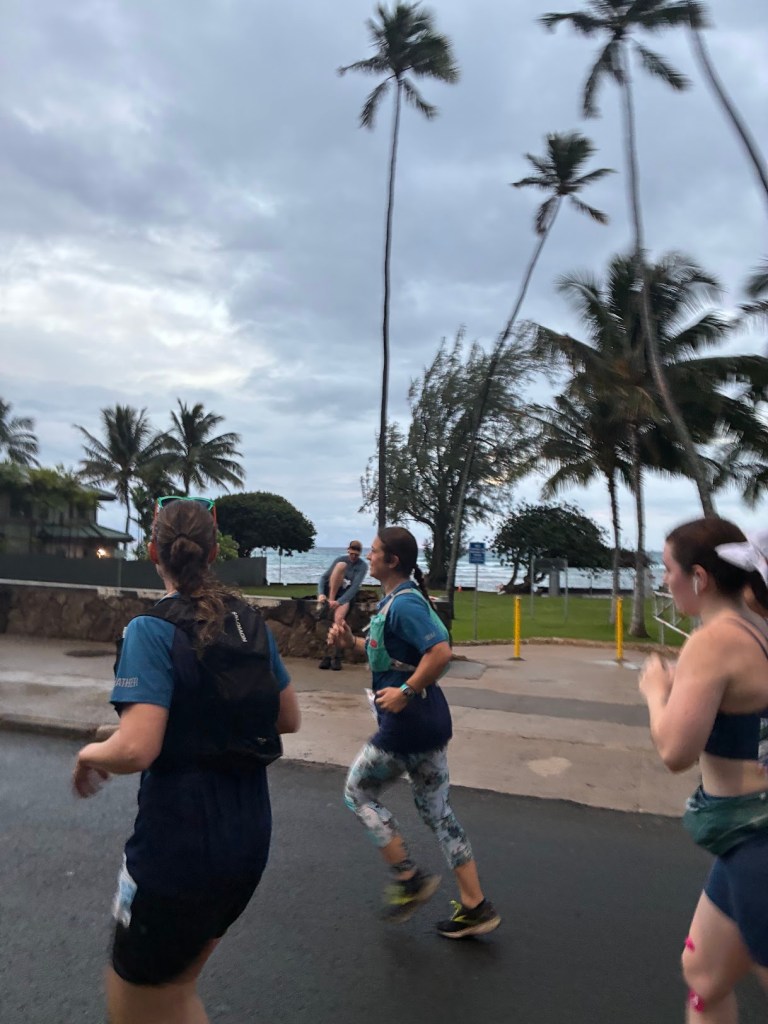
Running the marathon and talking about it with other runners afterward, I saw that you can plan, prepare, train and do everything right, and still so much can change in the course of the race. I spoke to some people who glowed and announced a finishing time they were thrilled with. And I spoke to others who told me that it had been a race where everything went wrong. People puked and passed out and got injured. I passed runners going down on the sidewalks, not able to continue, who looked like they’d done this a hundred times before. They were more prepared than I was and something out of their control just went wrong.

I would have been one of the easiest people to knock out of this race, because any number of the issues I deal with can sideline me unexpectedly. But this time, I was given the grace and the help to finish.

Me finishing this thing didn’t really represent me being strong, consistent and in control.

Me finishing was a result of aid.

Water, food, hose-offs, cheers and encouragement from the sidelines. Debby and Heather running next to me, mile after mile. Cody and our parents shuttling and caring for my little children. A backpack in just the right place to form a barrier between my back and the slick steps when I slipped on a muddy mountain hike just a few days before the race. Courage and strength in answer to a prayer for help to finish. The take-away is not the same as the why.

The why was: I want to prove to myself that I can face the next thing, even in this body.

The take-away was: I know I can face this next thing, in any sort of body, because He will help me.

He will answer me when I need him. He will be with me, one mile after another, providing aid. And when I ask, He will give me the eyes to see it. Jehovah-Ezer, “the Lord my help,” is his name.

“In my distress I cried to the Lord,
And He heard me.”

-Psalm 120:1

“I love the Lord because he hears my voice
    and my prayer for mercy.
Because he bends down to listen,
    I will pray as long as I have breath!”

-Psalm 116:1-2

“I prayed to the Lord, and he answered me. He freed me from all my fears.”

-Psalm 34:4

“This High Priest of ours understands our weaknesses, for he faced all of the same testings we do, yet he did not sin. So let us come boldly to the throne of our gracious God. There we will receive his mercy, and we will find grace to help us when we need it most.”

-Hebrews 4:15-16

Remember.

I sense the nudge in my heart.

Look at this ground where your feet have tread and remember how I helped you. Take courage. Yes, in my strength, you can do this next thing, too. And my Spirit who is in you, whom you have, will always supply that strength as you cry out to Him, as you reach for Him. He has you. You are never alone. You are never without what you need. I can always supply it.

Oh Lord,

Remind me when the way ahead is long, intimidating, and unfamiliar. When I’m tired and raw and losing heart. In this place, too, I can be broken because you are strong. I can be sick and it doesn’t mean I won’t heal. It just doesn’t mean that. Look how far I’ve come.

26.2 miles. You got me through 26.2 miles.

Not where I expected to be, but look how far you’ve brought me. May I not lose sight of how far we’ve come. May my heart not be unbelieving, but believe.

Benaiah is one Ebenezer. This marathon is another. Because when he stabilized and I was still so sick and struggling every single day, I cried out to you not to leave me behind. I thanked you for helping my son, but I wept that I needed more. And you answered me.

“Thus far the Lord has helped us.”

-1 Samuel 7:12

As I look forward to the next course you’ve marked out for me, and as I reckon with the reality that I have no idea how to finish – help me remember what you’ve already done.

May each bench, log, rock, foundation stone, beam, truss and nail on our land echo it as our build comes together:

“This far the Lord has helped us. Just look how far we’ve come.”

And to my friends who are fighting not to lose heart,

Even when there’s a long way to go, let us never think lightly of “this far.” “This far” already holds so many landmarks of His faithfulness to you. “This far” is enough for today, for there will be another “thus far the Lord has helped us,” tomorrow. So remember who it is that dwells within you. He is greater than what you’re facing. He is ready to help you.

“God is our refuge and strength,
    always ready to help in times of trouble.”

-Psalm 46:1

He is ready to work in you a deeper kind of glory and He invites you to show up just as you are and watch Him fight for you.

“Be strong in the Lord and in His mighty power.”

-Ephesians 6:10

Be still in the presence of the Lord,
    and wait patiently for him to act.

-Psalm 37:7

“But Moses told the people, “Don’t be afraid. Just stand still and watch the Lord rescue you today. The Egyptians you see today will never be seen again.  The Lord himself will fight for you. Just stay calm.”

-Exodus 14:13-14

You don’t have to have the answers or the strength. You don’t have to know which way to go. You just have to ask. Ask and wait, and ask Him to strengthen your heart to wait.

I would have lost heart, unless I had believed
That I would see the goodness of the Lord
In the land of the living.

Wait on the Lord;
Be of good courage,
And He shall strengthen your heart;
Wait, I say, on the Lord!”

-Psalm 27:13-14

So, eyes up.

Breathe.

Shake out those tense shoulders.

Take courage.

Fix your eyes on Him.

Then run with endurance.

There is great joy up ahead.

Therefore we also, since we are surrounded by so great a cloud of witnesses, let us lay aside every weight, and the sin which so easily ensnares us, and let us run with endurance the race that is set before us, looking unto Jesus, the author and finisher of our faith, who for the joy that was set before Him endured the cross, despising the shame, and has sat down at the right hand of the throne of God.

-Hebrews 12:1-2

So den, wat bout us guys? All dose peopo dat trus God befo time, jalike dey all run one race. An now, jalike dey all stan aroun us guys fo spock us run da race. Az why we gotta hemo all da heavy kine stuff dat make us run slow, an da bad kine stuff dat jam us up. We gotta hang in dea an no give up, an run da whole race dass fo us. Da whole time us guys stay run da race, we look at one guy ony, dass Jesus. He da One dat help us start fo trus God, an da One dat help us fo trus God to da end. Wen he wen suffa on top da cross, he hang in dea. Neva bodda him dat dey make him come shame. He do dat cuz he know dat bumbye he goin come real good inside. An in da end, he sit down in da mos importan place, by God throne, on da right side. So tink plenny bout Jesus! How he wen hang in dea an no give up wen all kine bad stuff from all da bad peopo go agains him. If you guys tink bout Jesus lidat, den you guys no goin get tired an lose fight.

-Hebrews 12:1-3 (Hawaii Pidgin Bible)
Never Useless: laying aside harsh words for hard stories

“In the years since our lives changed forever…”

It was a humble, short phrase, soaked with intention. The author was Katherine Wolf, survivor of a brain stem stroke that disabled her body, her speech, her face, and nearly claimed her life in her early twenties.

But she didn’t write, “In the years since my devastating stroke…” She didn’t even name what happened to her. She didn’t say “ruined.” Instead, she expressed the lasting impact of the stroke by using the phrase, “changed forever.” Katherine refused to turn her story over to be a narrative of only damage.

I wanted that same intention in how I frame what we’ve walked through, but I didn’t know how to get there. So, I started asking the Lord to give me His words for my story.

When I try to explain it, it goes like this:

(If you already know it, feel free to skip ahead.)

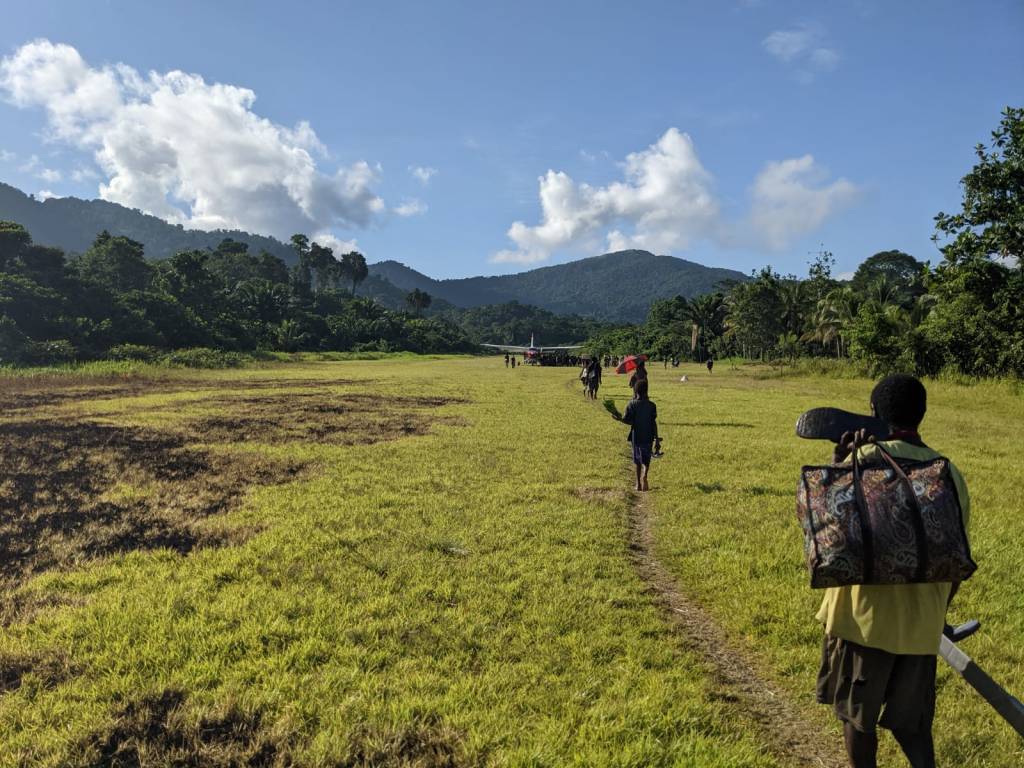
We studied for years and worked hard to pay for the flight training needed to prepare for an aviation ministry overseas. We sold our vehicles and belongings and moved our entire lives to Papua New Guinea to support missionaries working to translate the word of God into new languages. We studied the trade language for months to be able to live and function in the country. Then we got pregnant with our second baby. It was a brutal pregnancy filled with unrelenting nausea and vomiting that we could not get under control even with the prescription medications the doctors at our base were able to give me. We fought to handle it with IV fluids a few times a week and support from our co-workers to feed and care for our family while Cody continued in simulator training and working on the planes in the hangar.

Seventeen weeks into the pregnancy, our leadership and medical staff sent us back to the U.S. to receive more complex medical care. I was placed on a pump, constantly infusing nausea medication, then hospitalized for a cardiac arrhythmia that was contributing to how fatigued and weak I felt. I came home with a wearable defibrillator and an implanted heart monitor, then gave birth in the ICU. Shortly after we got the baby home, he began having eye tremors. We took him to the hospital and found that he had fluid compressing and leaking into his brain tissue, cysts in two parts of his brain, and another part that never formed at all. We delayed our return to Papua New Guinea and set up housing and interim work serving at the mission’s retirement home for the next year, which we spent getting frequent brains scans for the baby, trialing a medication to slow down the fluid, and seeing specialists. Each time we thought we were in the clear and could return to our home overseas, another issue came up with either Benaiah, Cody, or I that we had to address: surgery for a birth defect, surgery for ear infections, appendicitis, a tumor too deep to biopsy, speech delays, nervous system disorders, and then, daily migraines which forfeited Cody’s ability to renew his flight medical. Finally, we tried to go back to Papua New Guinea, in a mechanic role, to give whatever we had left, and two things happened. One, another evaluation revealed new delays with the recommendation for more support and early intervention for our child. Two, we felt an unexpected peace that there was something new the Lord had for us to press into: a ministry of comfort and encouragement to missionaries and ministry workers who are struggling.

People can ask me a simple question and sometimes I’ve wrestled that information into a straightforward answer, but sometimes it still unleashes a flood of emotion, frustration, and unexpected detail. Sometimes, I shut the topic down and pack all that untidiness away.

We can be like that with our stories.

Many of our lives take us on trajectories we never wanted or expected. I know the Lord had purpose in it. But I’ve struggled as we’ve made the pivot into this new and good thing before us. It meant letting go of trying to get back to our life in Papua New Guinea. It meant accepting that our lives had changed forever. And it was heart-breaking.

But reading Katherine’s words was a reminder that even our hardest stories are more than what has happened to us or what we’ve lost, and I wanted a way to talk and think about mine that reflected God’s unfaltering intentions and purposes, not just my heartache and confusion.

So I took some intentional time to put away distractions with the purpose of asking the Lord to meet me in the discomfort that I normally numb. I tried to breathe through many, many uncomfortable thoughts and just invite Jesus into those moments.

Comfort me, Lord. Give me your words for my story. Uproot anything that’s untrue. Plant your truth deep in its place.

For a few weeks I have been praying this, and I wanted to share a passage the Lord challenged me with as I sought Him in his word. Right smack in the middle of the powerhouse book of Philippians, Paul takes a moment to talk about Epaphroditus, a man who risked his life for the sake of Christ:

“Meanwhile, I thought I should send Epaphroditus back to you. He is a true brother, co-worker, and fellow soldier. And he was your messenger to help me in my need. I am sending him because he has been longing to see you, and he was very distressed that you heard he was ill. And he certainly was ill; in fact, he almost died. But God had mercy on him – and also on me, so that I would not have one sorrow after another. So I am all the more anxious to send him back to you, for I know you will be glad to see him, and then I will not be so worried about you. Welcome him in the Lord’s love and with great joy, and give him the honor that people like him deserve. For he risked his life for the work of Christ, and he was at the point of death while doing for me what you couldn’t do from far away.”

-Philippians 2:25-30

Here’s what I had never noticed before: Epaphroditus risked his life for the sake of Christ by getting sick.

Does this sound familiar?

My breath caught and I started to object, “But Lord, I didn’t stay to the point of death itself…”

Epaphroditus wanted to keep going. He wanted to give more than he had to give. He got sent back from something that was really important to him. He got sick. This was not his plan. His story is here for a reason. Do you want my words for your story? Look at how I describe his.

I studied the words used to depict Epaphroditus:

True brother, co-worker, fellow soldier. Welcome him with love and great joy. Give the honor people like him deserve.

I sat quietly with this passage, and I felt a gentle question nudge my heart:

“What if I honor the very thing that fills you with shame?”

Epaphroditus never would have written these things about himself. Nor would I describe myself that way. But I’m writing down this wrestling because I don’t think I’m the only one carrying around a bitter accusation that what I tried to give to the Lord was lost. And I think He confronted me on this because He thinks differently than you or I.

Lost? What do you mean? You offered it to me. As you walk with me, what you lose, give up, or suffer, I count as an offering.

Epaphroditus was upset that the Philippian church even found out he had been sick. But God inspired Paul to write these glowing words about a man who was being sent home. A man whose service was affected and interrupted by an illness totally outside his control.

I get honoring great sacrifice when I see what it accomplished. When hardship happens and it gets in the way and erodes what I am able to give; when I see cost, but I can’t trace out how it could be worthwhile…other words come to mind.

What was all of that? Why did we train for years and leave everything to give our lives to the work of spreading the Gospel only to end up hospitalized and scrambling to figure out housing back in the United States?

How useless. What a waste.

Those are the painful words that have painted my disappointment with extra sting.

What are yours?

My aching friends, God doesn’t think the same way we do.

He didn’t just see Epaphroditus’ body, taken down by illness, falling short of all he may have wanted to accomplish. God saw his heart.

He sees yours and mine, too, even when we are spent and there’s so much more need beyond our reach. Even when it all falls apart and we’re trying to rally, but we’re limping and frustrated and filled with doubt. Even when, like Epaphroditus, we’d rather people not even know how desperate things got. Even when we’ve tried to do something good and it blows up in our face.

“…Man looks at the outward appearance, but the Lord looks at the heart.”

-1 Samuel 16:7

God doesn’t look at weakness or sickness with annoyance like you and I might. He’s not surprised when it disrupts our plans. He’s not stuck on how it’s holding us back. He tells us we can boast all the more gladly about our weakness, because it is in that weakness (not once we get past it) that his power rests on us and that we find His grace sufficient. The unexpected stuff that hits our lives is part of the course that He’s marked out for us, even and especially when it gets in the way of what we wanted to offer.

This week, as I’ve continued asking the Lord to give me His words for my story, I was reading Malachi chapter 3 and I came across this:

“Your words against me are harsh,” says the Lord.

Yet you ask, “What have we spoken against you?”

 You have said, “It is useless to serve God…” 

And again, I was challenged. When I say, “What a waste. How useless.” Not only are those NOT God’s words for anything my story has held, but while leaning on my own understanding, I am speaking harshly against Him. I’m looking at the short timeline and the visible things I can wrap my human brain around and declaring that since this didn’t turn out the way I hoped, it was a waste. But here’s the truth,

“So, my dear brothers and sisters, be strong and immovable. Always work enthusiastically for the Lord, for you know that nothing you do for the Lord is ever useless.”

-1 Corinthians 15:58

Why would Paul need to write that to the church at Corinth? Because life is full of trouble and ministry is hard. Sometimes, it feels useless. So we need the truth that it is never useless.

If you’re spent and hurting and fighting with the lie that it’s not worth it. I’m going to repeat it again. This is what God has to say. Here’s your sword, pick it up:

NOTHING YOU DO FOR THE LORD IS EVER USELESS.

NOTHING YOU’VE DONE FOR THE LORD WAS EVER A WASTE.

In this life you will have trouble. But take heart. He is using those troubles.

Sometimes, it’s not the satisfying moments when it all comes together, it’s the hollow ones when it all comes apart where we learn to treasure and be satisfied in Him. Sometimes, He’s doing something new we never saw coming. Sometimes, waiting feels like defeat, but it’s not.

“So let’s not get tired of doing what is good. At just the right time, we will reap a harvest of blessing if we don’t give up.”

-Galatians 6:9

Epaphroditus carried the letter of Philippians from Paul to the church of Philippi. Maybe he carried the weight of disappointment on that long trek back, too.

Why, Lord, when I came all this way, would you let me get that sick?

But in leaving his ministry in Rome behind, Epaphroditus served as the courier that made it possible for you and I to read the words, “I can do all things through Christ who gives me strength.”

We have Philippians because Epaphroditus carried it back when he was sent home unexpectedly.

Maybe you, too, are carrying a message that God has crafted to strengthen and encourage and comfort, out of the very disappointment that has left your heart heavy, and you yourself just haven’t laid eyes on it yet.

Can you imagine the look on Epaphroditus’ face when Paul’s description of him was read out loud to the whole church?

I bet that same shocked, humbled feeling would overcome our hearts if we got a good glimpse of the way the Lord sees us. And I imagine He would say:

When I speak about you with grace, joy, hope, and satisfaction. Don’t argue. Take it in. This is who you are because of my Son. Welcomed, loved, honored, upright. Whether you’re making headway or collapsing under duress. When you’re strong and when you’re weak. I love you. I have always loved you. And I’m looking for your heart, not for what you have to offer me.

So we have stopped evaluating others from a human point of view. At one time we thought of Christ merely from a human point of view. How differently we know him now!

-2 Corinthians 5:16

For the eyes of the Lord run to and fro throughout the whole earth, to show Himself strong on behalf of those whose heart is loyal to Him...”

-2 Chronicles 16:9

When Hebrews 12 tells us to lay aside every weight, I think a good portion of it might be wrong descriptions of ourselves, and heavy, stinging versions of our stories that speak harshly of their author. Let’s not carry those around anymore. Life is heavy enough. But our God, full of grace and truth, has spoken new things over us, and He promises that there is a bigger story happening with the suffering and loss we can’t make sense of.

What if we took a deep breath of trust, moved into those dark, hurting places, held it all up to the Lord, and asked Him for His version? What if He’s gentle to us? What if He comforts us? What if He give us rest for our souls?

Lord,

I trust you, here and now, that this is the path you’ve marked out for me and you’re doing more with it than I could ever grasp. So, I will not call “loss” what you call “offering.” I trust how you describe me, even when I see all my issues, and I will take my stand behind the breastplate of your perfect righteousness, which has been applied to me in Christ, to extinguish every fiery dart of accusation my enemy would hurl at my heart, and every harsh word he would speak about my story.

I will not agree with him by speaking of you or of me in that way. Fill my heart instead with your truth, your words, and your peace.

“Unless the Lord had helped me, I would soon have settled in the silence of the grave. I cried out, “I am slipping!” but your unfailing love, O Lord, supported me. When doubts filled my mind, your comfort gave me renewed hope and cheer.”

-Psalm 94:17-19

““Each time He said, “My grace is all you need. My power works best in weakness.” So now I am glad to boast about my weaknesses, so that the power of Christ can work through me. That’s why I take pleasure in my weaknesses, and in the insults, hardships, persecutions, and troubles that I suffer for Christ. For when I am weak, then I am strong.”

-2 Corinthians 12:9-10

He Remains Unfailing: Puny Strength, Patient God

“But God had mercy on me so that Christ Jesus could use me as a prime example of his great patience with even the worst of sinners. Then others will realize that they, too, can believe in Him and receive eternal life.”

1 Timothy 1:16

After months of praying and holding our breath, another brain MRI is in the books for Benaiah, and it looks like slowly, very slowly, his ventricles are shrinking. No surgery at this point. It is so, so rare that a case like his can be managed with medication alone. We begged the Lord to intervene and He heard our prayers. I should be dancing for joy. I’m relieved. But it feels like the kind of relief at the end of long, tense movie where the suspense would not let up for a second and you’re exhausted from the adrenaline when it’s over. I feel absolutely drained.

He’s okay. He’s going to be okay. I’m so glad he’s going to be okay. I wonder if I will be.

We talked through some of the challenges we’ve walked through and are currently facing with our mission’s member care team and they pointed out that I use the word “should” a lot. They explained that “should” tends to describe our expectations and that constantly comparing reality to our expectations sets us up to feel guilt, anxiety, and discouragement over things we cannot and do not control. “Yes, that’s about the sum up of it,” I responded. We laughed. I cried.

Man, I am hunting for some new “should’s.”

Dancing for joy? Not so much these days. Begging for joy while I drag myself out of bed after a night of getting up with the baby to make breakfast for a high-strung toddler that will demand to have his eggs cut just a certain way? That’s happening a lot more often. Groping for joy when I feel spent after working like crazy to get ourselves set up to serve overseas only to watch all we’ve worked for get pushed further and further back on the timeline? You bet.

Is it enough, when you don’t feel joy, to bring your request before the source of joy?

Is it enough to ask for new mercies this morning when my heart is tired and teary instead of thankful?

My heart often tells me, “You should be handling this better.” But I think it would be more helpful to tell myself, “You should take this to the Lord.”

“Commit everything you do to the Lord. Trust Him, and He will help you.”

Psalm 37:5

He. Will. Help. You.

I do not have the promise that I will be strong enough. I have the promise that He will help me when my strength fails. When my joy fails. When my endurance fails. When my love fails. When my heart feels drained and I fall short of all the “should’s.” He remains unfailing.

“…For His compassions never fail. They are new every morning. Great is your faithfulness!”

Lamentations 3:22-23

One step at a time, one morning at a time, we are going to get through this. And when we look back, we will not be impressed with how I did what I should have. We will be blown away by how God was faithful and merciful to me when my “should’s” gave out. How He crafted a story full of things I did not expect, and worked through every detail of my disappointments.

I’m still processing through having to step away from ministry in Papua New Guinea for a season, facing one health crisis after another, a car accident, the loss of our trailer, moving from house to house, feeling at a loss with my toddler, and finding myself on my knees for my baby. I want to be over it. With the good news about Benaiah, I want to dust myself off and move on full speed. But there is some brokenness that’s taking time to smooth out.

Here’s what I’m working to remember. People are not necessarily drawn to the Lord because I serve Him so flawlessly and my life is so exemplary and I move through difficulty so gracefully. My faithfulness to Him is not the point or the power of this story. It’s His faithful love to me.

Oh Lord,

Thank you for having mercy on me. May others see in me the evidence of your great kindness and patience, and so be drawn to trust in you. Remind my heart that I am not the hero of my story, you are. When I am disappointed and aching over how I fall short; over my weakness, my issues, my wrestling to believe you, my self-centeredness, pride, impatience, and anxiety – May I remember that you are patient with me.

You are steadily working transformation in my life – the things that are pleasing to you. However it looks right now, as I gaze on you, you will keep changing me. I can have hope. Not because I am performing well, but because I am your work.

“God saved you by his grace when you believed. And you can’t take credit for this; it is a gift from God. Salvation is not a reward for the good things we have done, so none of us can boast about it. For WE ARE God’s masterpiece. He created us anew in Christ Jesus, so we can do the good things he planned for us long ago.”

Ephesians 2:8-10

Awkward: a new way to cut grass and do life

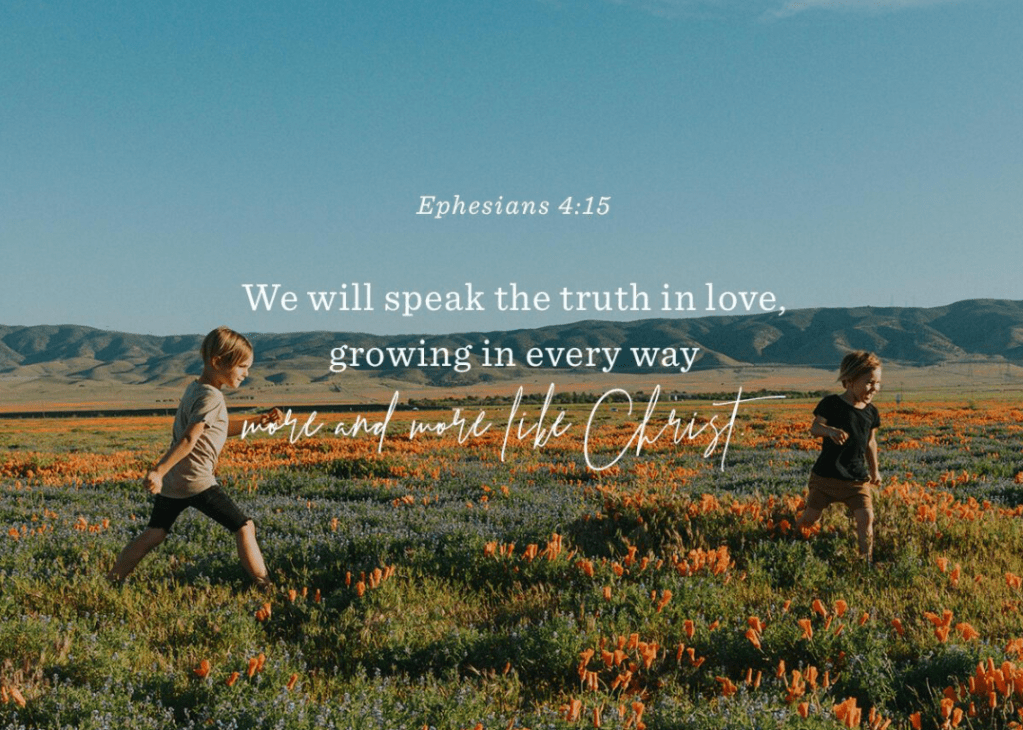
“Always be humble and gentle. Be patient with each other, making allowance for each other’s faults because of your love…let the Spirit renew your thoughts and attitudes.”

Ephesians 4:2, 23

Let me tell you a story about a missionary I recently got to visit with here in Papua New Guinea.

After years of living in the jungle, learning language and culture, and the excitement of presenting the Gospel in their heart language, he was preparing to teach the brand-new believers in his village through Ephesians chapters 4 and 5.  During lesson prep, he was considering God’s instructions for husbands and wives and how mind-boggling and challenging they would seem to these couples who have never, until now, even attempted to build a marriage based on Christ’s example of laying down every right for the sake of the other. He knew that trying this out was going to feel awkward for them; it would be totally different from the way things have always been. So he decided to use cutting the grass as an illustration.

This people group grows a lot of their own food, and they often prepare the ground for new gardens by clearing the grass. Except they have no lawnmowers.

They use a blade attached to a long handle. It’s shaped a little like a hockey stick, and in Tok Pisin, they call it a sarep. To use it, they walk back and forth, back and forth, forcefully swinging this tool to chop the grass right at the level of the dirt. It is hard, tiresome work, and there is definitely a technique to it.

The missionary asked this brand-new church: “What if you had been cutting grass with your right hand, year after year, your whole life, since you were a child?”

His lesson went something like this: What if, suddenly, you were told that you need to use your left hand instead? When it came time to cut the grass again, it would feel right to reach for your tool with your right hand. Every time you went to pick it up, you would have to fight that habit and remember to stop and reach with your left hand instead. It would take slow, awkward growth toward doing this work in a new way. That’s what it’s like to “throw off your old nature and your former way of life.” That’s what it’s like to “let the Spirit renew your thinking and attitude.” When you go to do the work of marriage, you are used to reaching for your own strength and understanding, and that’s what feels right. But you have to stop and choose to reach for something better. You have to let the Spirit teach you a new way to cut the grass.

This week, I was listening to a video teaching session on Colossians by Ruth Chou Simons, and I jotted down this quote, which I thought explained really well why we so badly need to switch hands:

“I thought it would be possible to have enough self-control to be the kind of wife I wanted to be…but I couldn’t make progress toward [it] because I was motivated by my own reputation, my own ideas of success, and my own ability to achieve. Love on the other hand is a greater motivator.”

I loved the insight that we often tackle good goals with weak motivations. Scripture calls us to be humble, gentle, and patient; to plan on each other screwing up, and to plan on making allowance for that. To look at our relationships, and budget for the forgiveness we will need to extend.

Why? To look good? To get my family to change by what a good job I do? To guarantee an outcome? To secure God’s help?

No. Because of His love.

As I become more and more like my Savior, and do the awkward work of yielding to His way of doing things, I start to speak and act in a way that is driven by love. Not by outcomes, not by lust for control or approval, but by a determined pursuit of what is best for someone else.

That is not my normal way of thinking. I am used to a different mentality and I slip easily into old thoughts and attitudes. So I need to throw them off again and again, to fight against old habits, reach with my left hand, and let Him renew my whole mindset.

“Since you have heard about Jesus and have learned the truth that comes from him, throw off your old sinful nature and your former way of life, which is corrupted by lust and deception. Instead, let the Spirit renew your thoughts and attitudes.”

Ephesians 4:21-22

So here I am, learning right alongside these brand-new believers, the uncomfortable, humbling work of exchanging my weak motivations for the compelling love of Christ and my flagging determination for a source of strength that never grows weak or weary.

Oh Lord,

Please do this in me this morning. Humble my heart, draw me to the place where I behold your love and I’m awestruck by it. Let it flow through me so that in all my interactions, I am gentle, patient, and ready to extend grace. Change me more and more so that, because of you and your work in me, I cherish others.

As I decide how to respond to whatever this day before me holds, help me to lay aside the old way of thinking and my self-dependence, and to reach, however awkwardly, for you.

Not By My Own Effort: on blood, sweat, and tears and grace given freely


…We rely on what Christ Jesus has done for us
. We put no confidence in human effort.

Philippians 3:3
 

I wrote a letter this morning, and as I worked to frame words that might lead to a resting place, my eyes burned. I realized that I was also pleading for myself. Maybe this morning, it’s a prayer breathed for your heart, too:

I see you and your desire to grow and to learn and to do such a good job serving and taking care of others. I see how hard you are working and how desperately you are trying. I’m praying this morning that you would feel settled in this truth: God is not disappointed in you or hoping for more from you.

So the question is this: are you hoping for more from you?

All that yearning can produce an unbearable amount of pressure, and it only helps us when we let it drive us to the cross and remind us that our best effort will never be enough, but because we have placed our trust in Christ, that longing and reaching are met in him. In him, we are perfect, well-pleasing, enough, praiseworthy, beautiful, satisfactory.

I want you to rest and to know that it is okay to be right where you are, offering yourself to Him, learning, and still finding some things difficult. 

Philippians 3:16 says this: “But we must hold on to the progress we have already made.”

Our successes and our progress are gifts. They are not earnings. And that is hard to remember when we have been laboring hard. But our hearts are reassured and strengthened for the tasks ahead to the extent that we accurately identify grace and gifts given freely to us rather than marveling at what we claim our own hands have built. 

When we lay down the illusion that we have reached this place by our own blood, sweat and tears, we also lay down the pressure to tackle the next mountain short-handed.

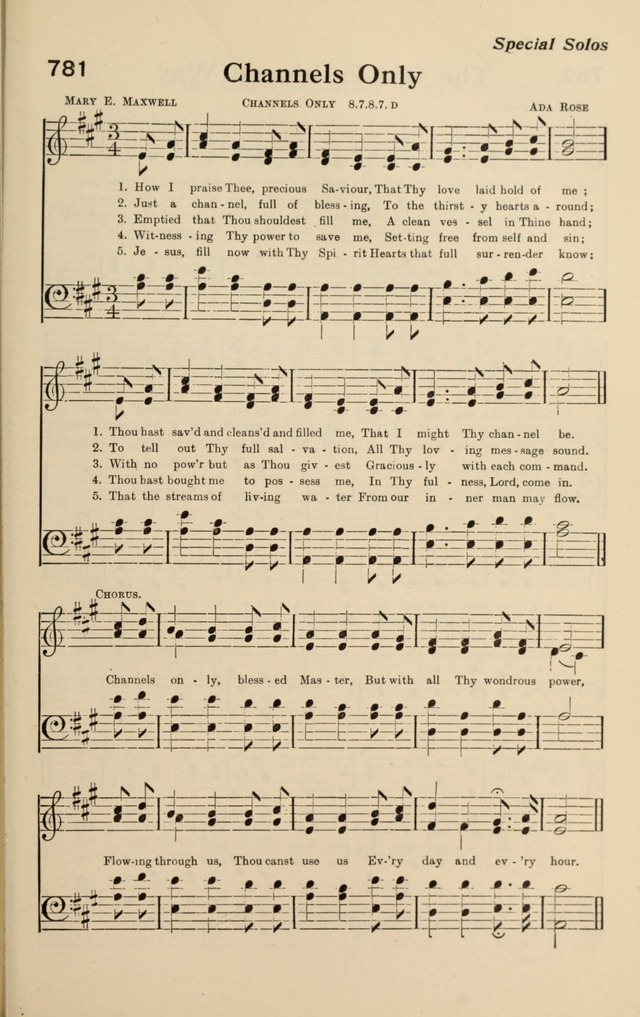
Instead, we can look back and trace the path of his faithfulness. We can revel in gift after gift; each reflecting the generous character of a lavish giver. And we can have confidence that no matter what we face next, no matter how spent we are, we will continue to receive good things, and we will continue to be a channel of good things to others. Not because we’re trying so dang hard, but because our unfailing fountain of life will continue to be who he is toward us. 

He is ever able to keep giving as we look to him, as we keep asking for help, and as we keep thanking him for how far we’ve come. Not by our own effort, but by his undeserved grace.


…And what do you have that you did not receive?... (1 Corinthians 4:27)

God saved you by his grace when you believed. And you can’t take credit for this; it is a gift from God. Salvation is not a reward for the good things we have done, so none of us can boast about it. For we are God’s masterpiece. He has created us anew in Christ Jesus, so we can do the good things he planned for us long ago. (Ephesians 2:8-10)


Lay Out the Welcome Mat: on how to take pleasure in weakness

“Each time he said, “My grace is all you need. My power works best in weakness…”

2 Corinthians 12:9

Here it is. The great, paradoxical secret that unravels the way I think.

God faithfully uses the gifting he has given me. He asks me to be a good steward of my strengths.

But his power does not work best in my strengths. His power works BEST in my weakness.


Last month, I had the privilege of contributing as a guest writer for one of Man in the Mirror’s monthly newsletters. I mentioned it (okay, I announced it with celebration and a happy dance) to my dad, who simply said, “Good. I’d like to see what you write reach a larger audience.”

I explained that I’d like to be published here and there, but I would sort of prefer that my reach stay small because I love attention and I’m doomed to become self-absorbed and inauthentic if I ever become well-known.

My dad said this:

“I’d like more people to read what you write because it generally carries a theme of dependence. And that is so needed.”

His words humbled me. It’s not about the writer. It’s about the message. And this is a message worth calling to the attention of as many people as I can possibly summon, because our souls so easily forget:

I need Jesus. I need him desperately. I must depend on Him. For my salvation and for absolutely everything after that.

“Don’t be selfish. Don’t try to impress others…We rely on what Christ Jesus has done for us. We put no confidence in human effort.”

Philippians 2:3 and 3:3

More and more, may this become my hallmark:

Dependence on the Impressive One. Awareness that without him, I have nothing to offer (John 15:5).  An ironclad grip on the truth that he deserves all the honor for anything good in my life (Romans 15:17-18), and that when I start to be impressed with myself, I have become enchanted with a sad lie; because I have absolutely nothing that I have not been given. (1 Corinthians 4:7)

May I learn to be at ease with my weaknesses and with my short supply of resources, stamina, and even the desire to produce what is good.

These are opportunities to invite him to step in, not set-ups for failure. My bad attitudes, short temper, and need for transformation are the canvas upon which he does his best work. And it. Is. Breath-taking.

May I refuse to hide my frailty. May I learn to humbly lay it out and take pleasure in it. It is the welcome mat for his grace to enter in. It is the holy place where my strengths bow out of the way and his power takes the stage. It is the starting place of every good story.

When I see my inadequacy and I decide to I call it what it is instead of hiding or posturing or striving to be enough, that is when his unimaginable endurance, creativity, hope, and light seep into the most desperate places.


Pray with me:

Lord,

You are the unfailing answer to my cry for help.

My inadequacy, my frailty, my weakness: these are your gifts to help a blind heart see how badly it needs you. They are ever more precious than the gifts I so often plead for.

Transform how I view weakness, hardships, insults. Paul learned how to lean into them and take pleasure in them. Teach me how this is possible for my heart, too, because my giving up place is your giving place.

So help me to lay out the welcome mat boldly.

“So now I am glad to boast in my weaknesses, so that the power of Christ can work through me. That’s why I take pleasure in my weaknesses, and in the insults, hardships, persecutions, and troubles that I suffer for Christ. For when I am weak, then I am strong.”

2 Corinthians 12:9-10