Wherever You May Be: on rhythms when there is no routine

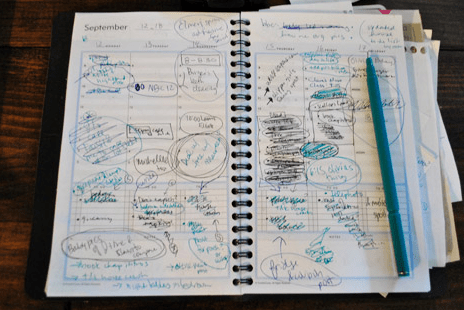
disorganized planner


“…You must never eat any fat or blood. This is a permanent law for you, and it must be observed from generation to generation wherever you live.”

Leviticus 3:17 (NLT)

NKJV says it: “in all of your dwellings.”

Amplified Version translates it: “wherever you may be.”

I realized as I read this, three chapters after the close of Exodus, that the Israelites were not yet home. They had escaped Egypt, but would not settle for decades to come. And yet, God did not wait until they were all moved in to set out guidance for how they should live.

Walking away from the polytheism of Egypt, they still had a lot to learn about the one, true God and how to interact with Him. God decided these were not lessons for later. Right there, in the sandy shadow of Mt. Sinai, He gave them rules for wherever they may be.

They were more than a century away from erecting the Temple, so God told them to make Him a holy tent and taught them how to worship Him while camping out in the desert. He did not standby until they had a routine down that He could “fit into.” He explained how Israel should approach Him, honor Him, and follow His laws for their lives while they camped, right where they were.

These were guidelines that would hold both in the land they would someday call their own and in the upheaval of travel while they picked their food from the ground and made do with homes of canvas. They did not have to learn a whole new set of policies and scrap the old rule book when they entered new territory.

The worship of the living God is not a rhythm only for stable lives and steady routines. It is an essential anchor for wherever I may be: a temple for the city and a tent for the wandering, but not something I leave behind until I have life figured out.  It is something I pack up and take with me, for I will need it wherever I am; no matter how predictable or up-in-the-air things are that day.

Lord –

You gave Israel tent pegs and anchor points that held regardless of the situation, because they were going to see a LOT of change in the coming years. Here was your reminder that in all the transition, you would always remain the same. Wherever they landed at night, whatever they were walking through, your rules didn’t change and neither did your invitation to come and worship and find you ever steady.

Meanwhile, I’m not sure I can handle the fact that the fence next door is changing. Talking to my neighbor, I had to consciously breathe slow and remind myself everything would be okay even though I liked the wood fence better.

It just doesn’t take a whole lot to throw me off, and it doesn’t seem to be getting any easier to face transitions. Big or small, no matter how many times I’ve gone through them before, they always throw me. It’s overwhelming to think of all the changes that still lie ahead for us: new homes, new jobs, new people, new culture, new language…new fences.

How important it is for me to hold on tight to the steady, daily rhythm of time before the unchanging One.

Lord, be ever steady for me. I so need something not to change. And remind me that I don’t have to wait until I get my bearings to know exactly where you are.

“…be content with such things as you have. For He Himself has said, “I will never leave you nor forsake you.”  So we may boldly say:

“The Lord is my helper;
I will not fear…

Hebrews 13:5-6


Never Forget the Salt: sorely needed reminders for the forgetful soul

salt

“Season all your grain offerings with salt to remind you of God’s eternal covenant. Never forget to add salt to your grain offerings.”

Leviticus 2:13


Never forget to add salt. Why? Did God taste the difference?

It seemed like a strange command to me, so I dug a little deeper and was intrigued with the cultural parallel. Apparently, it was a thing to “share salt” with another person. AKA, a shared meal was a pact of loyalty, and there was a level of trust established once people had eaten together.

An oriental considers as sacred the expression “bread and salt.” When it is said, “There is bread and salt between us,” it is the same as saying, “We are bound together by a solemn covenant.” A foe will not “taste the salt” of his adversary unless he is ready to be reconciled to him.

-Fred H. Wright, Manners and Customs of Bible Lands

Perhaps this is why the older brother remained outside when his father threw a feast for the Prodigal Son. A meal together meant friendship. Shared salt meant you were on the same side. And here in Leviticus, God drew this symbol of hospitality, loyalty and peace into Isreal’s worship.

The Amplified version says it this way:  You shall season every grain offering with salt so that the salt (preservation) of the covenant of your God will not be missing from your grain offering.”

So God and Israel “shared salt” with each grain offering and He told his people to never forget the salt when they came to Him. It was a tactile memorial of their agreement, as grain by grain, they were prompted to remember His promises and keep them close.

I think what I noticed most was the word never. It carries the tone of warning, of heaviness, of grave importance.

“Never forget to add salt.”

NKJV reads: “You shall not allow the salt of the covenant of your God to be lacking…with all of your offerings you shall add salt.”

In other words: Do this every single time. Never bring an offering to me and leave out the reminder of what I have offered you. Worship. Thank. Confess. Sacrifice. Surrender. Pray. Do all of these, yes. But Remember most of all. Come to me and sprinkle the symbol of my covenant with you into every interaction. Do not, in your rituals, forget who I am and what I have promised.

Never forget the salt.


Lord-

How much of my interaction with you is steering my mind back to the salt? How often do I become concerned, frustrated, and stressed because I have lost sight of who you are and what you have promised me?

Like the presence of salt in a meal, a mindfulness of your promises changes the whole experience. It’s not a good idea to leave it out.

Israel was given a covenant: obey and God would bless them, disobey and He would curse them. But I have been given “a far better covenant.” (Hebrews 8:6) I am not just one of your own people, I am your own child: made righteous, wholly loved, given power, offered rest, called to purpose, washed clean, held safe.

How much more important it is that I never forget the salt?

Remind me today, Lord, in all my tasks and interactions, to come before you often, and to keep close in mind who you are and all you have promised me. It is the savory flavor of hope to my soul.


Here’s to Thorns: on weaknesses, issues, and mountaintops

thorns

“I was given a thorn in the flesh, a messenger from Satan to torment  me and keep me from becoming proud. Three different times I begged the Lord to take it away. Each time He said, ‘My grace is all you need. My power works best in weakness.’ “

2 Corinthians 12:7-9


Why does God’s power work best in weakness? Because the weak accept His help.

Why allow a tormenting burden on Paul, a servant who was so ready to obey God, when it holds him back from what he could do? Because holding us back from what would feed our pride is not holding us back at all.

I tend to think “If only…”

If only I wasn’t chubby, or consumed with crippling insecurity. If only I didn’t overthink everything. If only I glided through life smoothly instead of catching corners with my shoulders and doorknobs with my hips. If only I could make it across a room or a conversation without stumbling like an awkward baby deer. Imagine what a person without my issues could do with my gifting!

But we, none of us, get to be just our gifts without our issues. And maybe that’s the whole point, because the focus would so quickly become the person and what they could do, instead of our God and what He can do.

Oh Lord-

am held back by the constant negative stream of thought, by the assumption that I bring more burden than joy to people, by clumsy hands that drop and break and shake, by allergies, by a tendency to ramble, and by the terror that I might be that person who obligates others to politely listen when I think I’m offering something helpful, something that moves them.

But Lord, you are not held back by any of these things.

All weaknesses and issues and thorns do is prevent me from plunging ahead by myself. There is no place they hold me back from if I have help. It is a good design, so that I do not reach summits alone and gaze back at my own hard work; I kneel on mountaintops before you and thank you for carrying  me here.

Teach me to bring my limits to you, and look for how you will show your strength.  Teach me to embrace the whole person you made me, rather than obsess over the things I wish were different. Lord, you have loved me by allowing ever-present reminders of my need for you. They are safeguards against the pride that poisons and isolates and pushes away the help I am desperate for.

So here’s to thorns. Even you wore them.


“I am the Lord, the God of all the peoples of the world. Is anything too hard for me?”

Jeremiah 32:27

I am not a Fifty: on distraction, comparison, and love

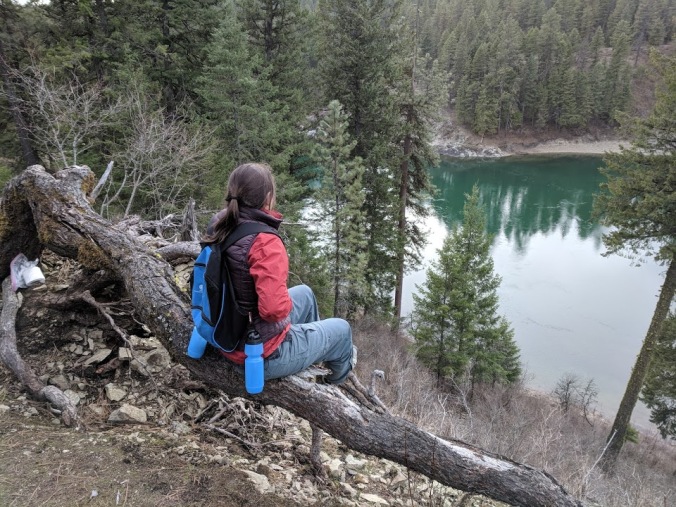
beka looking out

We prove ourselves by our purity, our understanding, our patience, our kindness, by the Holy Spirit within us, and by our sincere love…We serve God whether people honor us or despise us, whether they slander us or praise us…”

2 Corinthians 6:6,8


Have you ever paid for groceries with a fifty dollar bill? You know how the person running the check-out will pause, pull out the marker with the magic-test-my-cash-to-see-if-I’m-counterfeiting ink, hold the bill up to the light and then nod and move on?

I don’t know about you, but sometimes I feel like I go through life holding myself up to other people’s reactions, the way the grocer squints at a fifty dollar bill against the florescents. He holds it up to see if it’s any good. And I hold myself that way, too.

People have no idea. They’re just out there reacting to life, thinking about how tired they are and how far away is the coffee? Or maybe it’s the oil change the car needs or the late mortgage payment. They are totally unaware that I’m reading into every facial expression, every word, and asking the silent question: Am I any good?

I know this. I KNOW this. And yet I forget that they’re probably distracted with their own stuff and I decide they’re reacting to me. Good or bad, I read their responses as an authenticity check. Am I the real thing? Am I any good? What a minefield for my security.

Even if they do give a sour reaction that’s specific to something I did or said, how often is that an accurate gauge on which I should base my life from that moment forward?

For years I have been trying to figure out how a sensitive person like me, who probably isn’t going to just stop being quite so sensitive, (believe me, I’m a flight medic, I’ve tried), can learn to ignore the constant distraction of what other people think.

Here’s the answer I got in this verse: Don’t serve them. Do serve Him.

Serving God produces in me all sorts of proof. But I must serve Him, not an image that’s impossible to keep up, not someone else’s idea of what it is to be good, or I will always be off-course, reaching, grasping at air, insecure, unsteady, X-ray-ing myself by the flourescents, just to be sure.

But if I set aside how I look to others and focus on Him, on just serving and obeying Him, His spirit in me shows me how to offer purity, understanding, patience, kindness and sincere love.

He doesn’t just shut down my reactions so that I will behave right. He transforms ME so that I am totally sincere and what I say is still loving, what I do is still kind.

Hold that kind of life up to any light, and it’s gorgeous.

So what about the here and now? Where, if I was sincere, I’d tell you that I quickly run out of understanding and patience, that a ten-minute off-kilter interaction can be under my skin for days, and that I find myself living under the rule of other people’s reactions all the time, desperate for their approval, easily hurt, easily angered.

I must learn that where my understanding, patience, kindness and love run dry with so little provocation, HIS DOES NOT RUN OUT. His love keeps pace with the hurt, His strength rises to meet the challenge, His welcome overturns the rejection.

No matter what the day holds, I think the most challenging thing about it is the people, but I do not have to offer myself up for their opinion. I am not a fifty dollar bill. I am the real deal: a channel through which He gives his love freely and sincerely, a small person through whom a big God proves Himself, and IT IS NOT ABOUT ME, it is about Him. So I can set aside the agony, the scrutiny, and the comparison. No one compares to Him.

Oh Lord-

Help me to serve you, to be sincere, and to offer kindness again and again.

Help me to know I can just break down and ask you for help when I’m struggling. You never said I would get it perfect. You said your grace would be sufficient for my weakness. (2 Corinthians 12:9)

Live through  me so that people see you. Help me to be secure in you, steadied by you. When I measure myself by the reactions of others, I am in constant limbo. When I compare myself to others, I forfeit whatever emotional margin I had to offer them. Comparison poisons compassion. And you never said I had to be like them or liked by them, you said to love them.

Help me choose to be led by you, not controlled by others, so that I can take the hits and still offer sincere love.

Help me see that I am no fifty.

I am your work.


“Take our comparison and give us compassion, for others as well as for ourselves.”

-Emily P Freeman, Simply Tuesday


Fresh Mercy: on how mornings don’t always feel fresh.

boots fresh spring

“I will never forget this awful time as I grieve over my loss, yet I still dare to hope when I remember this: the faithful love of the Lord never ends!…His mercies begin afresh each morning…”

Lamentations 3: 20-23


When I have been washed under by loss and each step forward took gritting my teeth  through ragged, broken breaths, fighting back the ocean of pain always rushing to my eyes at the slightest suggestion, I have found this verse a life-line.

It steadily acknowledged that there are times that are legitimately awful. It did not say “count your blesssings.” It said “this is really bad.” It allowed me to hate how life was. And yet it held out this:

Dare to hope, because He offers fresh mercy this morning.

It would be hopeless, except you have Him. 

So dare to hope, even in this.

Words to live by, because my hope rests on His solid love. Words to take up in dark hours, overwhelming moments, heartbreak and loss. Words to rally toward when I look at the situation and can’t come up with a way to make it work out, when I’m at a loss and see no good outcomes.

And words to take hold of when mornings don’t feel like fresh starts.

This morning, it was not a huge loss or a major transition, but a thousand small weights that I carried when I met this verse again, and still He spoke through it. Because it’s easy to feel buried the moment I open my eyes to the alarm clock, and even with daily things, hope takes daring. Even in the daily routines, my insecure soul longs for new reassurance.

Lord-

Teach me. Show me how to use this day. Show me who you are in it.

Thank you that struggle leads to life and that my growth is a process you tend to with such care. Thank you that your mercies are fresh, for the deep hurts of life and also for the daily burdens.

I’m buried under too many urgent things today. I find myself developing “alarm fatigue” and shutting off my brain, my desire, to all of it, because I don’t know how to choose which thing is next, which thing most deserves my attention.  Or if I know…I falter at how to do that thing, because it is big and important, difficult and time-consuming. And whatever I choose, I still feel the sting of what I’ve neglected. There is more I need to get to than I have time for, and urgent things lose their urgency when I lose hope that I can ever get to all the needs before me.

Oh Lord, what is it like to have no limits?

What was it like to step into a body that suddenly had them?

Only you know the balance.

Lift the pressure and give me your settled peace in its place. Show me your radiant joy for this moment, here, now, beneath all that remains unfinished.

Show me how to enjoy that even I am unfinished. For you are doing the work. You are not in a rush, and I don’t need to be either. It is enough to lay the needs before you and do this next thing well. It is enough to see I am too small to get to everything and to breathe easy because it is not my job to get to everything after all.

Lift my eyes from the worry that steals away my energy and teach me, Lord, to dare to hope. In the big and the small. In loss and in busyness. In emptiness and in overwhelm.

You offer fresh mercy for this day, too. Unbury me that I may taste it.


Lie Down: on how NOT to do vacation

lie down

“…the Lord, their true place of rest, and the hope of their ancestors…”

Jeremiah 50:7


My suitcase is still sitting in the middle of the living room. It’s not even unpacked yet and the hum of everything that needs to be done is rising inside me. I have been battling an emotion I can’t put my finger on all day.

It was not until I read this passage that I could name it: restlessness.

This surprises me because I just got back from vacation. I broke the routine, I went to a conference full of fresh information, I escaped with Cody to Seattle for the weekend and I thought I would come back feeling rested and whole and refreshed and ready to jump back in.

But I don’t.

I don’t. Because physical rest doesn’t solve everything. Fun does not necessarily fill the soul and interesting things don’t satisfy it. Our weekend held adventure and exploration and wonder (I will never get over jellyfish), but I did not carry it home with me breathless and reminiscent, as I often do.

jellyfish

Then, as I read about Israel’s true place of rest, I realized that I know this place. And the times I have come back from a break relaxed and emotionally ready for the world are the times when there was a good chunk of time set aside just to be with the Lord.

This trip, I did not build in time to linger with Him. I read quickly in the morning and rushed off to the next thing. I planned visits to Pikes Place, Puget Sound, Seattle Aquarium and the Garden of Glass, but I did not plan a visit to our true place of rest.

forest path

I did not build our schedule to accomodate pauses, reflection, still moments.

I did not plan a time to ask questions, to face angst, to listen, to savor His word like a dessert instead of gulping it down like breakfast-to-go; to ponder, when I would normally get to the point; to pay attention to Him and ignore the distractions.

Physical rest is no substitute for soul rest, and that’s why a change in physical location does not automatically send me back refreshed.

New scenery helps, because it doesn’t hold all those visual cues that normally call me away to my responsibilities and my waiting to do list. But I often see new locations only for the new sights and sounds and experiences they have to offer, and miss the potential they hold to slow down. 

puget sound 2

I miss the chance to stand still while nothing is demanded of me; to unload mental burdens and to unpack complex thoughts and to take in my Savior, unrushed. Anytime a vacation has held that, it’s been the highlight. The whole setting seems cast in warm hues, and I walk forward at ease because I have been to my true place of rest and that’s what He is like.

When I haven’t made it there, I can tell. Because physical restoration is no match for soul heaviness. A change of pace is not the same thing as emotional relief. And I find myself irritable, distracted and troubled over why my vacation isn’t working.

rainy sound

I can pack it chock full with exciting activities and relaxing settings, but it doesn’t come close to when there is just empty time to connect with Him. There, I find Him SO GOOD, so much better than all that I could have filled the time with.


Lord-

The relief at the end of my to do list is nothing like the rest I experience when you tell me to set it aside. You are enough while my list is unfinished. So help me to lay it down long enough to see you.

You transform the way I look at my whole world, and even the vista from the top of the Space Needle pales next to the view through the rain-stained window I have right here.

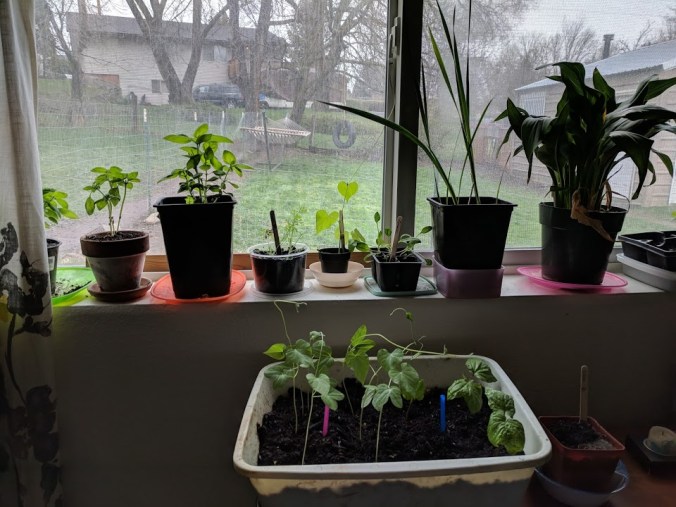
plants growing!

A worry-free weekend, away from all my responsibilities is not as good as a worry-free Monday, right smack in the middle of them. Because I can learn to just breathe, take each step, and follow you through it, instead of serving the thousand fears and concerns that steal away my moments while I long for my next break.

You are the Good Shepherd and you make me lie down.

So help me lie down now.

lying down

Oh self:

Lie down.

On your bed, on your couch, on your floor, in your chair, at your desk, or just in your head. Lie. Down.

Lie still, Lie flat, don’t move, don’t rush, don’t accomplish, don’t impress.

For the next 5 minutes, take a soul-cation. Rest, because HE has done the work. He will carry out His work in you. You don’t have to hold all of life together. He holds it.

seal

Lie down all that extra stuff you’re carrying. Unload on Him.  (Psalm 55:22)

Lie down and stay there until those racing thoughts quiet and you can hear Him again.

Lie down because you’re allowed to! You are called to enter into rest. (Hebrews 4)

Lie down and enjoy the green pastures, the still waters, the breeze, the birds, the rain, deep breaths, the blank canvas behind your eyelids, the quiet musings that do not go unheard, that heart of yours that beats for a purpose beyond the ordinary.

You just had a vacation and you’re already dragging? Lie down.

You haven’t had a vacation and can’t even keep up long enough to plan one? Lie down.

fish lying down

Come to Me, all you who are weary and carry heavy burdens, and I will give you rest.            (Matthew 11:28)

Self, you don’t even need PTO to have it. Or a free weekend, or an escape, or a day without deadlines, meetings, small people who need you, and big people who are waiting on you. You don’t need plane tickets or a beach or a quiet forest because He is your true resting place and He is right here.

Lie down and listen.

Stand still and see.


Rags, Not Rope: on kindness in crisis

“…So Ebed-melech took the men with him and went to a room in the palace beneath the treasury, where he found some old rags and discarded clothing…”

Jeremiah 38:11

Why do I care about some ancient guy with a hyphenated name who is digging around for old clothes? Let me set the stage:

Jerusalem is at war. The prophet Jeremiah has repeatedly warned that fighting Babylon is a losing a battle. He is ignored. Again and again he announces God’s instructions to go with Babylon quietly and make new homes there. This was a time for surrender, not battle. Jeremiah spoke the truth, but he was not popular.

Now those warnings had landed him in a muddy pit, where he sank in the muck. No food. No water. The city in chaos around him. Evil officials gloating that they had finally silenced the nay-sayer.

Fire. Screams. Scuffles over waning supplies. The occasional boulder smashes against stone, hurled over the wall and punctuated by the hoarse war-cries of an enemy dialect. Wind whistling through tattered awnings and collapsing structures that once formed the border of a sunny, bustling market.  Now there is no sun. The air is thick with smoke.

And Jeremiah sinks in the mud.

Lowered into the dark where his cries would be drowned out by the noise of a city under siege, Jeremiah had no way to summon help. Perhaps it is this situation that finds its way into his Lamentations prayer:

“They threw me into a pit
    and dropped stones on me.
The water rose over my head,
    and I cried out, “This is the end!”

 But I called on your name, Lord,
    from deep within the pit.
You heard me when I cried, “Listen to my pleading!
    Hear my cry for help!”
Yes, you came when I called;
    you told me, “Do not fear.”

Lamentations 3:53-57


Enter Ebed-melech, who catches wind of Jeremiah’s situation and makes a bee-line to the palace to speak with the king.

He, too, was facing crisis. He, too, felt the lack of food and the siege on the city wall and the swarming Babylonian army pressing up against it on every side. It was not from a place of security and safety that he reached out to help. In the midst of his own concerns, he noticed Jeremiah.

He bursts into the palace and exclaims to an already over-tasked king that Jeremiah has been placed in desperate straits. He gains permission to take men and go rescue him. Then comes verse 11, where they go, not straight-away to the cistern, but to a lower room in the palace where they start to scavenge rags.

I read it and thought,  How resourceful, they must not have any rope. I bet they’ll tie them end-to-end and use that to get him out.

But I was wrong. They did have rope. Ebed-melech took the detour for another reason.

rope

“…He carried these to the cistern and lowered them to Jeremiah on a rope. Ebed-melech called down to Jeremiah, “Put these rags under your armpits to protect you from the ropes!” Then when Jeremiah was ready, they pulled him out…”

Jeremiah 38:11-13

It’s a small detail, but it caught my attention. There’s a guy stranded in the bottom of a well, starving and sinking, and Ebed-melech’s thoughts go not to the rope they need to get him out, but to the rags they need to protect his skin.

Lord-

Help me to become an Ebed-melech.

May this story serve as a reminder that you care not only for rescue, but for ropeburns. Even if no one else sees my desperation, you hear me, and that is enough. You are capable of providing the most compassionate of advocates. You see when my life is in jeopardy. You notice my smallest abrasions. You bring help just in time, and you bring help in ways I wouldn’t have thought to ask for.

May I learn this of your character, Lord: that you are not just heroic, plunging to the rescue. You are kind, carefully arranging padding. And that is what you produce in those who serve you. Not just courage, but kindness.

Teach me to trust you with my crisis, that I may move into the calling to rescue others. Like Ebed-melech, may I think of the small things, not just the big things.

For when I tend to the small things, I step beyond duty into love.

And that means that sometimes the small things ARE the big things.


Related Reading

On Dread & Distance: Biblical Guidelines for how to Respond to the Coronavirus Pandemic
5 Steps to a Light Heart in a Season Heavy with Coronavirus Concerns

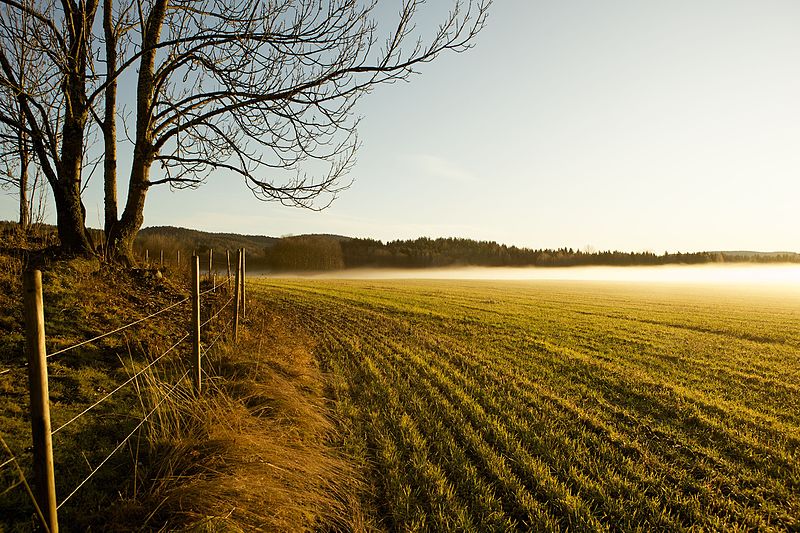
Buy a Field: on normal in the midst of crisis

misty field

“See how the siege ramps have been built against the city walls!…And yet, O Sovereign Lord, you have told me to buy the field – paying good money for it…”

Jeremiah 32:24-25

God’s instructions often seem incongruous to me

Joshua 6: Battle plan: March around Jericho seven times, blow trumpets, and yell.

2 Chronicles 20: Go outside the fortified city and stand still before the three nations who wait to destroy you.

Jeremiah 32: Buy a field in a city that’s currently under siege, right before the country changes possession, and also while you’re in prison and can’t even use it.

It’s not the advice wizened, experienced men would have given. But Jericho fell, three armies lay slaughtered, and Babylon didn’t last forever. So it was good that young men, not sure how to proceed, asked the Lord and listened.


Nothing is too hard for you

Jeremiah’s response in his situation made me laugh, it was so relatable: Okay, Lord, I paid GOOD MONEY for this, I am TRYING to believe you and feel good about this decision, but I’m mighty uncomfortable…do you see the siege ramps?! Do you not recognize where this is headed?

It looked like a waste of money in an unstable time when Jeremiah really might need it. If there’s anything he didn’t need from his prison cell in the middle of a city under siege, it was a field. But God told him to buy it, so he ran to a promise:

“O Sovereign Lord! You made heaven and earth by your strong hand and powerful arm. Nothing is too hard for you!”  (verse 17)

and God echoed it:

“I am the Lord, the God of all the peoples of the world. Is anything too hard for me?…Fields will again be bought and sold in this land…” (verse 27, 43)

Buying land meant taking God at his word that even though the city was burning right now,  He would restore Jerusalem, and it would be worth having the field when the time came.


I might need to do something normal

Sometimes, it’s not even that an investment has such an incredible return down the road, but that the act of investing in God’s promises does my heart good here and now, especially when things feel out-of-control, unstable, under siege.

Perhaps that is when it’s most important to bank on the fact that He keeps his promises, and that nothing is too hard for Him. Perhaps that is when I most need to do something normal.

To read a story, shop for groceries, take a nap, go on a walk, even at incongruous times. To stop and have a conversation, to pick a flower, to watch a sunset, to buy a field.

Sometimes, small actions like that are actually really big.

Because setting aside the weight of the world to just do the next small thing He asks of me means choosing that I believe He will take care of me. And when I decide that I just can’t believe that right now, my moments and my days and my sunsets are stolen away and I am left desperate, distracted, and spread thin until the crisis wanes.

But I can choose instead to carry on as if things will be okay, even when they look like they won’t be. Even when there are siege ramps.

Maybe that’s why it’s so significant that Jesus napped in a storm-tossed boat.

Perhaps it’s okay to be unsure how to proceed; to just ask Him and do what’s next, even if that looks foolish to a world that obsesses over the news, works 70-hour weeks, plans precise futures, and claws after the power to bring them about.

A world that lives in constant terror of a crisis or a Savior who offers rest in the midst of it. Whom will I follow?


A deep breath & a prayer

Oh Lord-

Always you are offering a life free of worry, if I will only trust you enough to enjoy it.

Banking on your faithfulness is always a good investment. So help me, when the siege ladders go up, to take a deep breath, close my eyes, lean into you, and buy a field.  Help me to make my decisions based on your steady promises of what will be, not based on fear and worry and what-if’s.

I’m tired of constantly reacting to the thousand emergencies that fall across my path, scrambling this way and that to hoard security in whatever way I can. That is no way to live.

You have given  me the ability to walk calmly through hard situations, eyes ahead, certain that nothing is too hard for you; not even this.  So Lord, show me how to hear you and step into that, to see a crisis and do something normal, to see a city falling, and obey you when you say to buy a field.

“I have told you these things so that in me you may have peace.

In this world you will have trouble. But take heart! I have overcome the world.”

John 16:33


Related Reading

On Dread & Distance: Biblical Guidelines for how to Respond to the Coronavirus Pandemic

5 Steps to a Light Heart in a Season Heavy with Coronavirus Concerns

pit-7
Rags, not Rope: on kindness in crisis

Exiled: on settling in places we don’t like

misty pine trees

This is what the Lord…says to all the captives he has exiled to Babylon…

Build homes and plan to stay. Plant gardens and eat the food they produce…You will be in Babylon for 70 years. But then I will do for you all the good things I have promised, and I will bring you home again.”

Jeremiah 29:4-5, 10


This passage, titled “A letter to the Exiles” held a promise that the Israelites would come back home. But it also gave the instruction to make a home where they were.

God knew they would pine for Jerusalem, but didn’t want them to hold themselves back, contained and disconnected in Babylon. They had been forced there and that was bound to come with some baggage, but they were going to live there for SEVENTY years! They needed permission to make some peace with that and settle.

It is not good for human beings to try to remain portable and ready to pick up and move for seventy years. It is hard on us when we’re transplanted, but it is even harder when we refuse to put roots down in our new soil.

And so God challenged them to settle in the place they were, while still holding before them hope of the place they were meant for.

They didn’t have to give up on Jerusalem, it was going to happen, they were going to come back home and be restored and rescued and be close with their God again. But it wasn’t going to happen for a long time, so He gave them some short-term things to work toward, too: gardens, homes, marriage, kids, grandkids. He gave them things to enjoy while they waited and told them to pray for the land they were in, not just the land they were looking forward to.

The other day, a friend and I were discussing difficult seasons where you are not where you want to be yet, or maybe not where you want to be at all, and how you can spend the whole time just waiting for the next move. Sometimes a new season can feel like an arranged marriage, and the heart needs time to learn to love. It’s good to give ourselves that time, but also necessary to give our hearts permission.

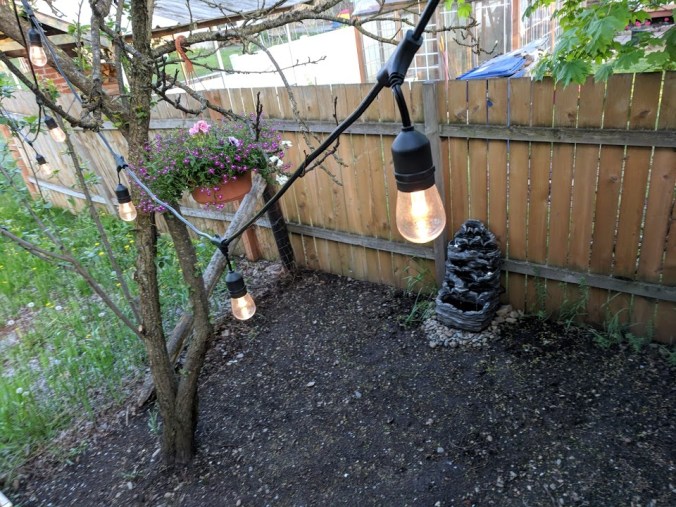
I’ve struggled in Spokane for a long time, struggled with all the things I didn’t like and all that I didn’t understand about what was next. I struggled moving from the Sunshine State to a place where it gets dark at 3:30 in the afternoon and where winter reigns far past it’s welcome. But this year, I’m planting a garden. I set up a waterfall in my yard. I went hiking and saw a moose. I’m noticing the mist in the pine trees.

We’re leaving in 9 months. And yet, I don’t feel like I will lose what I have finally invested. I don’t have to hold it back, for it will be beauty I have thoroughly enjoyed that I can pass on to the next person who comes to call this space home. As I settle in and forge new routines and cultivate beauty, I find those efforts so much more refreshing and worthwhile than I expected. It’s not because the results will last forever, but because they help me rest, enjoy, and be where I am, even as I look forward. It is okay for me to know I will move on to a new home, and still decide to make it home where I am right now.

I am not only on my way to somewhere.

I am here.


Lord-

Help me to give the timeline to you and breathe out and breathe in and look around and call this home and thank you for it.

Help me to do this instead of growing frustrated as I pine for a place that may happen someday, but where I cannot be now – as I strain for how I’d like things to be, but constantly face my inability to control what is – as I lean forward toward who I want to be, but cannot speed up the progress.

When I decide firmly to believe what you have to say, it is such a relief from all the stress I carry. And daily you beckon me to the cross, to lay it down again and remember that I don’t have to be someone I’m not, I don’t have to be somewhere I’m not. You have only asked me to come to you and be right here. You have designed me to need breaks, to need roots, to need rest, to need you. And those needs come with your permission, those needs lead to the beautiful.

It is a sweet gift to have permission to rest, to know I am allowed to be here and this is allowed to be home. Help me not to miss it.


For this good news—that God has prepared this rest—has been announced to us just as it was to them. But it did them no good because they didn’t share the faith of those who listened to God.[a] For only we who believe can enter his rest…this rest has been ready since he made the world…So there is a special rest[f] still waiting for the people of God. 10 For all who have entered into God’s rest have rested from their labors, just as God did after creating the world. 11 So let us do our best to enter that rest…

Hebrews 4:2, 3, 9-11


Palaces

Mysore Palace, India

“But a beautiful cedar palace does not make a great king!”

Jeremiah 22:15


A leader can make himself look like a great king, or he can choose to be one, no matter how that looks.

King Josiah had helped the poor and needy. King Jehoiakim used them to erect a palace of cedar.

Jehoiakim did what was best for himself, and abused others to meet his own needs. Josiah did what was right, and all his needs were met.

“‘That is why God blessed him. He gave justice and help to the poor and needy and everything went well for him. Isn’t that what it means to know me?’ says the Lord.” 

Jeremiah 22:16

A leader that knows the Lord chooses to do what’s right, uses his power fairly and gives his resources to care for those who need help. A leader who walks before his God knows that this is what pleases Him. The security of the kingdom against enemies, the needs of the palace, his own welfare…those are all things the Lord can handle, things the king cannot ensure by his own means anyway.

But God would have leaders turn their attention to the ones who depend on them for justice and could benefit from what power they do have, rather than obsess over the things they cannot control. And all would be well.

It is easy to become consumed with ourselves and our needs and our worries and devote all our time to a well-fortified, shiny outside.

But cedar palaces do not make great kings.

When we prioritize how we look, we often sacrifice who we are. We build a veneer that suffocates the life on the inside.

And I would rather be a good person than look like an impressive one.

I would rather hand over all that is too much for me to my God and just see to those areas where I do have the power to make a difference. I would rather relax, knowing I do not have to impress everyone else. I am free to just walk before Him. He handles all my needs, so that I can set my focus on others. And All will be well.

I do not have to chase after the things the world prizes. He is the highest prize.

I am not a king, but the choice is mine all the same. Will I build up palaces or people?


Lord-

Make me brave to live as Josiah did, to serve you as a daily routine.

To “eat and drink and do justice and righteousness.” (Jeremiah 22:15)

Teach me to prioritize doing what’s right, not just what is best for me; to decide to please you, not just to please myself; to care for others because I know that I am cared for.

Help me to know what it is to know you, Lord.

And thank you for the freedom and transformation that brings. Because knowing you creates life on the inside, even if the outside isn’t so shiny.