Progress

baby plant

Forgetting the past and looking forward to what lies ahead…We must hold on to the progress we have already made.”

Philippians 3:16

I’ve always loved the encouragement in this passage to leave what’s past behind and press ahead. Clean slate. Fresh tries. This time as I read, I noticed the advice in these last words:

We must hold on to the progress we have already made.

Too often, I try to hold on to progress I haven’t made yet. In my desire to continue growing and improving, all the things that don’t measure up fill my focus. All the things I’d like to be different. All the areas I thought would be better by now. I only see where I’d like to be and grow frustrated with where I am. I become disappointed, discouraged, and drive myself harshly forward. The criticism doesn’t really help things, but I feel obligated to be brutally honest with myself about how I’m not meeting my own expectations. Always reaching forward, never taking hold.

If I’m always looking to the next thing, the next step, the next level, my fingers will grasp frantically and come up with nothing. I am not there yet. And I can’t hold on to something I don’t yet have.

But I can, rather than despairing over where I’m not, hold on tight to thankfulness for where I am, how far I’ve come, those things I am getting the hang of.  I can recognize those areas where I do see growth, and hand my heart gentle encouragement instead.

I can hold on to the progress I have already made. In fact, I must.

If the way I’m thinking produces anxiety, I must change the way I think, because He has said Be anxious for nothing.” (Philippians 4:6)

If the way I set my goals produces discouragement, I must change the way I set my goals, because He has said “Do not be afraid or discouraged.” (Joshua 1:9)

And if the way I face my past covers me with shame, I must change the way I look at my past, because He has said, “So now there is no condemnation for those who belong to Christ Jesus.” (Romans 8:1)

I am free to look back and be thankful. To be here and be thankful. To look forward and take hope.

And I must.


Lord-

I want to keep moving forward, but not without celebrating what you have done so far in me. When I look at me, I will never, on this earth, see perfect.

But I will see progress.


Hope

hope

Cursed are those who put their trust in mere humans, who rely on human strength and turn their hearts away from the Lord…But blessed are those who trust in the Lord and have made the Lord their hope and confidence.

Jeremiah 17:5, 7


I have a picture frame sitting on my writing desk right now that displays this reference. It’s there, not only to challenge me to hope, but to remind me that I must put my hope in the right place.

Today I sit here again, intimidated at the prospect of final edits on the book I’m writing. (It’s been undergoing “final” edits for a while now…). I’m afraid to finish because that means deciding whether to try for a publisher or just self-publish.

I’m unsure of what to try, what to expect, and yet I find myself back at this verse and it holds a question as it always does, a question I must ask when I begin to back away and grow discouraged: Where is my hope?

To rely on human connections, human charm, human strategy, human strength, human resources, human effort, is to turn away from the Lord. And when I turn my gaze from Him, I will always grow discouraged in proportion. The challenges grow larger and more impossible. What I have to offer is laughable compared to them.

Who am I? Who am I? I ask, shrinking back, wondering what I was thinking to even try.

But the right question is who is He? Who is He?

As I look to Him, I hope and I am not ashamed. I trust Him and there I find blessing. I lean forward and find what I do not expect.

And it is good.


So Lord-

With this step, and every other, help me just to lean forward, eyes fixed on you, and follow. Teach me not try to figure out what to expect around this corner, but to find fresh hope in knowing you will walk me through it. You will give me all I need to face it, when it is time.

Be my confidence when my confidence is lacking. Remind me that nothing is too hard for you, especially when my hope hesitates at the sight of me. You do not depend on large offerings or great talent. You use willing hearts. (2 Chronicles 16:9)

You do not ask me to risk for no reason, and I do not have to fear rejection or failure. They are not the end of me, because I am not rejected by you; and because if I have obeyed you, I have not failed.

If I have chased after you and find myself in water too deep, it is there I will find your grip steady and sure. I may be cold and wet and disappointed, but I will find again that I am not out here alone.

And maybe, just maybe, this time, I’ll walk.

Here’s hoping.


Those who look to him for help will be radiant with joy;
    no shadow of shame will darken their faces.

Psalm 34:5

Plans

plans

“I know, Lord, that our lives are not our own. We are not able to plan our own course. So correct me, Lord, but please be gentle…”

Jeremiah 10:23


I listened to a speaker today who talked about knowing what I want and not seeing that desire as the enemy. She said that knowing what I want and demanding it are two different things. That knowing what I want can lend clarity to decisions and that it even prepares me for when I don’t get it, because I can name what it is I’m feeling (disappointment) and move through it rather than wonder why I feel irritable and frustrated.

I feel like this verse offers the other half: I can know what I want, but I cannot know what will be.

My desires are not for no reason, but they are not always for this time.

I am not able to plan my own course. I am not able to make my will happen. But I am able to offer my wants to Him and ask for gentle direction, gentle correction, and gentle reminders that I am not my own.

He has plans for me, the one He created: higher plans, better plans than mine, and that is why He plans the course. That is why I am not able to.

So Lord –

Plan it. However you like. And help my heart along as it names its desires, offers them to you with hope, and then waits.

I would have lost heart, unless I had believed
That I would see the goodness of the Lord
In the land of the living.

Wait on the Lord;
Be of good courage,
And He shall strengthen your heart;
Wait, I say, on the Lord!

Psalm 27:13-14


Commit your way to the Lord,
Trust also in Him,
And He shall bring it to pass.
He shall bring forth your righteousness as the light,
And your justice as the noonday.

Psalm 37:5-6

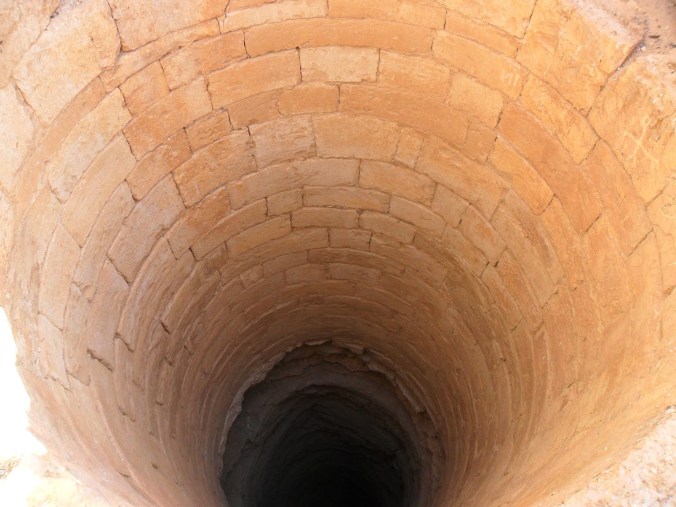
Empty Wells

empty well

“They did not ask, ‘Where is the Lord who brought us safely out of Egypt and led us through the barren wilderness – a land of deserts and pits, a land of drought and death, where no one lives or even travels?’…My people have done two evil things: they have abandoned me – the fountain of living water. And they have dug for themselves cracked cisterns that can hold no water at all.”

-Jeremiah 2:6, 13


He is not the God of the easy way. Not of straightforward paths, convenient circumstances and undisturbed comfort.

No one traveled the wilderness. But He led thousands through it, with elderly, women, and children among them.

He is not the God of the boring.

He is the fountain of living water. He can lead his people into barren places because He is able to meet all their needs there. He is not a well with only so much to go around, but an ever-replenishing fountain that can always offer more when more is needed.

He is not a good fairy that would always buffer and lead away from danger. Not a God who depends on good circumstances to keep his people safe, but a Maker of warriors that plunges right into the darkness and fights for and alongside His people.

He is not what I expect.

He is not what Israel expected. He is glorious, and they wanted wood. Boundless, but they wanted someone they could understand. Almighty, but they wanted something they could control.

And so, while those who worshiped false gods held fiercely loyal to their empty symbols of protection, Israel turned away from the One who had led them through wastelands no one survived, out of slavery no one escaped, into promise no one imagined.

To broken cisterns. To figures of wood that did not speak to them or lead them anywhere or perform any wonders. Useless, empty wells.

And I turn, too. Because I, too, want something I can understand, control, summon. I don’t like being led into danger. I become lazy and start to prefer comfort to wonder. I let my soul go dry.

But I was made to seek a living fountain – to thirst and keep drinking, to face danger, to feel wonder, to follow, not totally understanding, to believe for promises still ahead, unseen, out-of-reach.


Lord-

This is what a life of walking with you looks like. Teach me not to grow tired and turn. The wells stay put, but they are empty. You are moving, challenging, beckoning me forward: into difficulty, through fear, toward the barren. But you are life, so I will follow. Anything else is a pale, dry substitute to a dehydrated soul.

So teach me not to exchange you, not to grow frustrated and abandon you, not to listen to my fear and shrink back.

Teach me to follow close, eager, breathless. It’s terrifying, but you are a faithful leader.

Mirrors

bronze mirror

“Bezalel made the bronze washbasin and its bronze stand from bronze mirrors donated by women who served at the entrance of the Tabernacle.”

-Exodus 38:8

This is just one of many instances where the people of Israel gave of their belongings to provide for Tabernacle construction. But it stood out to me because of what these women gave. Bronze was needed and so they gave bronze. But in doing so, they gave up their ability to look at themselves.

They lived in tents in the wilderness; I doubt they  had several mirrors hanging. Bronze was precious metal, I don’t know that they had it in abundance. I suppose there were occasional pools in the wilderness, but water is a poor substitute for a mirror.

And yet these women traded self-gazing for cleansing. They gave up the ability to see what they looked like so that the spiritual leaders of Israel could approach God sprinkled clean. They exchanged seeing the dirt for dealing with it.

And still I think it’s a necessary exchange. Look at myself or look to Him. For gazing longer does not help what I see. But I can give the image-caster to Him and say,

“Fix this, Lord. I have no way to. You make me clean.”

And it is a beautiful trade.

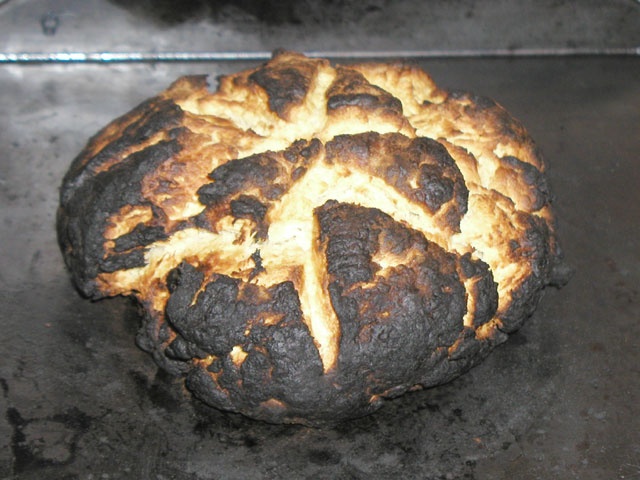
Burnt Bread

burn the bread

“Afterward take the various breads from their hands, and burn them on the altar along with the burnt offering. It is a pleasing aroma to the Lord, a special gift for Him.”

Exodus 29:25


I’m trying to look at this through the eyes of the Israelites who were hearing these instructions for the first time. They were wandering, fresh nomads who had not settled and did not grow crops. They walked out every morning hoping there would be food on the ground to gather so they could eat that day. They hadn’t been disappointed so far, but they couldn’t keep leftovers, so it would be easy to be a little on edge about the food issue.

And then they hear this:

Make bread, not from the manna you have plenty of, but from fine wheat flour and oil. Put the loaves in a basket at the tabernacle entrance before the Lord. Then put the basket in the priest’s hands to hold up toward the Lord. 

And then burn them.

Eventually this became normal as Israel grew accustomed to God’s law, but initially, I wonder if anyone reacted.

You mean make bread, loaves of good, hard-to-come-by bread, and then burn it on purpose?! What a waste! We could eat it and put it to good use after you’re finished holding it up in a basket! Why burn it?

But they were not to eat it, because it was holy.

It is hard, when God asks me to offer something I think could be used a better way, to remember that if it is offered to Him, it is not wasted.

My time, my training, my plans – even as I lay them before Him and follow, I am often upset when I don’t see what my sacrifice accomplished; when it seems like what I’ve given up was wasted.

It doesn’t seem like burning bread would accomplish all that much, but maybe burnt bread did a whole lot more for the Israelite people as an offering than it would have as food. Giving up perfectly good bread to be burned took trusting that there would be manna tomorrow; it meant deciding that it’s not as ridiculous as it seems to burn up food when you know the One you are offering it to can come up with plenty more.

Maybe sometimes, what God asks me to offer is not only about what He could accomplish with what I give, but about what He accomplishes in my heart by asking me to let go and give it to Him.

Let’s be honest, somebody put in the work to make those loaves by hand, and some of the loaves fed the priests, but some of them were tossed in the fire, and if it had been me, it would be easy to throw up my hands and say

“If you were going to burn three of them, why didn’t I just make three less?! That’s time and wheat flour I can never get back!”

But another way to react would be this:

“The loaves I crafted with these fallen hands were considered too holy for human lips. They were destroyed, yes, but that burning was a gift to the Lord, and He does not think it was for nothing.

Lord-

When I don’t see what we’re accomplishing here, help me to remember that it is a sweet and holy thing to give to you – that I can trust the hands in which I place the offerings I hold precious, and I can value the work you do in my heart even when it seems like what I’ve given is burnt or lost. Maybe sometimes, my soul needs to do something hard so I will remember that you are there in the hard things. And when I let something I think I need go, I see again that you are still taking care of me, and that nothing you ask me to give up will leave me at a deficit.

Thank you, Lord, for holding my small gifts as precious, my unseen sacrifices as special, and for never wasting what you call me to offer.

Grey Areas

grey area 2

“Suppose someone leaves money or goods with a neighbor for safe-keeping, and they are stolen from the neighbor’s house…if the thief is not caught, the neighbor must appear before God, who will determine if he stole the property.”

Exodus 22:7-8

Until this point, Moses and the men he had appointed had been handling every dispute the thousands of Israelites came up with and could not settle themselves. Here, God started laying some ground rules. Many situations were covered in detail so that no third party had to be brought in to decide the matter; they already had His decision on what should be done in writing.

But this verse caught my attention because, while He did significantly relieve the amount of involvement required of the human leaders, God did not just put in place a bunch of rules and then leave them to it. He wrote himself into them over and over.

If no one saw the thief, I saw, bring it to me. (v. 7-8)

If no one knows whose claim is true, I know, bring it to me. (v. 9)

When the complaint of the helpless falls on deaf ears, I hear. They can bring it to me and I will do something about it.  (v. 22-24)

The law was never entrusted to human hands with the intent that they would interpret or enforce it independent of their God. He did not designate a person who would be the go-to for difficult situations or grey areas. He designated himself.

It was not just a legendary document with mystical origins; it was communication from a God who continued to offer communication. A God who did not stand aloof, far-off, watching people struggle to discern what He really meant. A God who was heavily involved with his people, who did not ask them to stand and face the oncoming chariots without coming down himself to stand in the way.

Not too busy or too important to step into their individual situations.

He asked them to bring him into it; into disputes, into mysteries, into feasts. He intended for them to make Him an integral, familiar part of their daily lives. He was a God to be held holy and regarded with caution, but also a God that they recognized was for them; a God that was concerned with the smallest matters of the heart as much as He was with battles and territories and armies.

Lord-

Teach me this: you still offer to be heavily involved with my oh-so-daily problems and decisions. You want my heart to acknowledge you in all of it. There’s no category where your preference is that I not bother you with it. And you come yourself to stand guard, to hold me firm.

There are not enough black and white situations for me to just go off of rules and not ask for understanding. Life is full of grey areas. And so, from the beginning, you have said to come to you when I don’t know what to do. Mold my view of you so that I expect your invested interest and help, and learn to come to you eagerly, with all of it.

“Trust in the Lord with all your heart and lean not on your own understanding; in all of your ways acknowledge him and he shall direct your paths.”

Proverbs 3:5-6

Rivals

rivals

“And the Lord said to Moses, “Say this to the people of Israel: ‘You saw for yourselves that I spoke to you from heaven. Remember you must not make any idols of silver or gold to rival me.”

Exodus 20:22-23


He had just explained this in the 10 commandments: No other gods. No images.

And then, His presence fills the mountain with smoke and thunder and the people draw back and ask for an intercessor, and the first thing He brings up to Moses is this:

NO OTHER GODS. NO IMAGES.

You have just seen it, I have no rival. Don’t invent one.

The Lord went on to tell them that when they were building altars they weren’t even allowed to shape the stones. Why? Because what we design, we tend to worship. Anything we craft becomes a rival. And the God of lightning and billowing smoke should not have to compete with a pile of rocks.

How little it takes for my attention to drift. How low my view of Him has become when I allow anything to rival Him in my heart. How quickly I forget, even when He’s just reminded me. And so, just as He did with the Israelites, my patient God reminds and reminds and reminds:

Let your heart belong only to me. NO OTHER GODS.

“Dear children, keep away from anything that might take God’s place in your hearts.”

-1 John 5:21

“Keep your heart with all diligence, for out of it spring the issues of life.”

-Proverbs 4:23

I read today that “love vigilantly guards [marriage’s] purity.” (Ryan + Selena Frederick in Two as One)

I think the same concept applies to my relationship with the Lord. His love has made me secure. But I must not relax when it comes to the leanings of my heart. They require guarding. Love vigilantly guards.

So Lord-

Help me. Help me to diligently keep my heart. Teach me to immediately respond when it begins to construct rivals. Make me sharply aware when my worship drifts. Build our relationship and teach me to fiercely protect it. Let the echo of your words from so many years ago resonate through my heart still, reminding, always reminding:

No other gods. I have no rival.

No Water

no water“At the Lord’s command, the whole community of Israel left the wilderness of Zin and moved from place to place. Eventually, they camped at Rephidim, but there was no water there for the people to drink.”

-Exodus 17:1


At your command, they ended up camping where there was no water.

In hindsight, you made water come gushing out of a rock, so it was no big deal. But at the time, thousands of people were losing daylight and there was NO WATER. No time to move somewhere else, tormented by thirst from a long day’s journey, not knowing how far they’d have to travel tomorrow, or the next day, or the next, and still find no water, and prod their livestock on with no water, and watch their kids with no water.

Anyone who doesn’t know You starts to ask: “Who exactly is running this operation?! How can He be this All-Knowing God if He led us here?!”

And even those who do know You fight back those questions.

But if I know You well, and I’m here by your command, and there’s no water, I start watching closely to see what You will do.

Because I know that You don’t lead those who follow You into traps. You don’t bring them into something that wasn’t planned out all that well. You don’t drop them into a helpless situation and leave them to fend for themselves.

That’s not who You are. That’s not how a good shepherd acts, and You call yourself the Good Shepherd.

You are a God of details, of  “do not be afraid,” of  “stand still and see what I will do.”

And when You direct my steps into dry places, I must learn to expect that You will bring the water. When you direct my steps into danger, I must learn to remember that You stay and stand guard. When I don’t understand why You led me here, I must hold on all the tighter to who I know You are.

Because if I discard what I know of You when I interpret what’s going on, I come away with wrong assumptions that damage my heart. I turn on You and complain, instead of just asking for help from a God I know is ready and willing to help me.

To emotionally survive what we will walk through, I must learn how to keep my heart from going there.  I must look around, see that there’s no water, take a deep breath and say,

“Okay, I don’t understand this, but I still trust You; so I will watch closely to see what You will do.”


The Roundabout Way

walking in circles


“When Pharaoh finally let the people go, God did not lead them along the main road that runs through Philistine territory, even though that was the shortest route to the Promised Land. God said, “If the people are faced with battle, they might change their minds and return to Egypt.” So God led them in a roundabout way through the wilderness…

-Exodus 13:17-18

It was wilderness that had them questioning Your goodness, wondering if they would die, and pining for slavery. But they did not turn back. Battle might have turned them back.

It was not even a battle they were entirely avoiding. Israel would battle Philistia for years to come. But they weren’t ready now, and so You took them through the wilderness to give them time. 

How many times have I banged my fists against the wall in frustration over how much time we could have saved if You had just led me directly? I have sobbed in agony over lost time, lost plans, roundabout routes. I have glared as I’ve questioned You bitterly: why the detour? Why the mystery? Why not just show me where we’re headed and then take me straight there?!

Maybe it’s because I wasn’t ready for the battle.

Maybe if I’d gotten there earlier, I would  have turned back. Maybe the roundabout way was not to steal away my precious time, but to give me precious time before I faced what would come. You give treasured lessons in the wilderness and essential preparation en route. And You know human hearts.

You know when they’re ready and when they’re not. You patiently endure our complaints and accusations all along the way as You gently steer us around the battle that would have destroyed our young courage before it had time to find its footing.

Lord-

Thank you for giving me time. Thank you for not rushing my unsure soul into the fray. Thank you even for the wilderness, for the roundabout way, because they show that You were taking your time with me – even when I did not realize I needed it.